The Pressure of Dry Dock
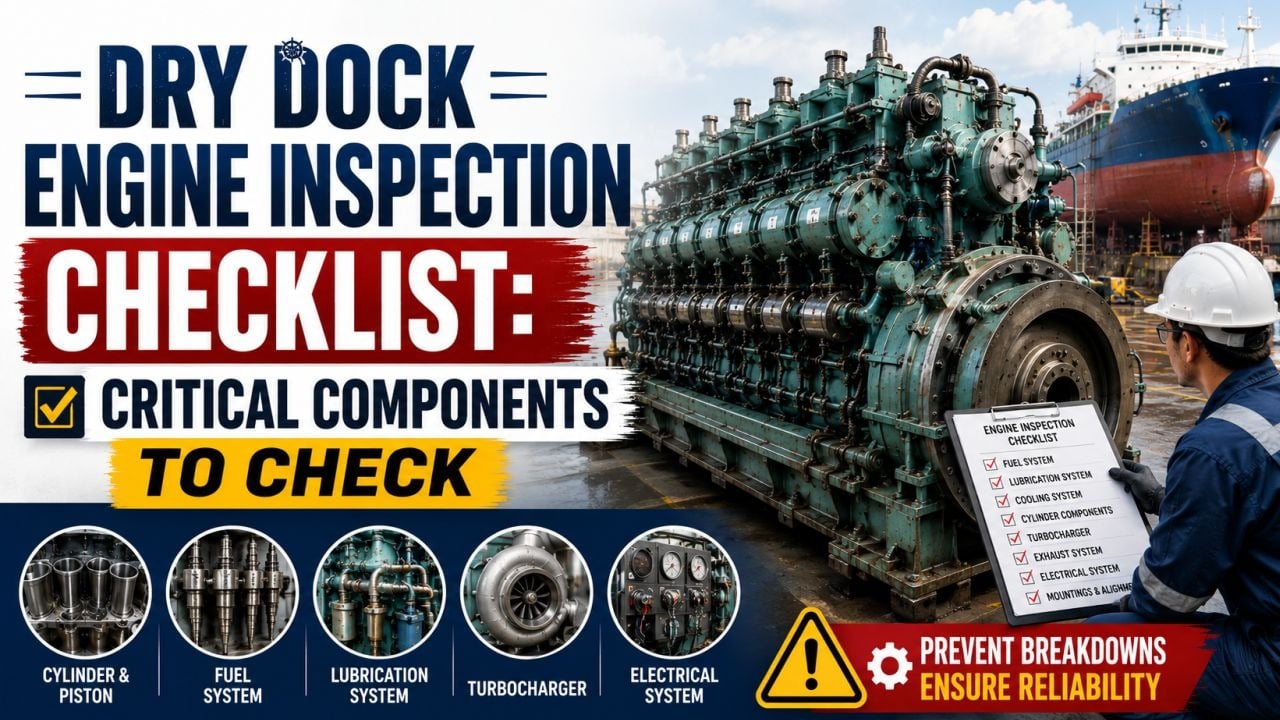
Dry docking is the most intense period of a vessel's lifecycle. For marine engineers, it is a race against time to dismantle, inspect, repair, and reassemble critical machinery while the ship is out of the water. Having a structured, systematic inspection checklist is the only way to ensure that nothing is missed before the vessel goes back to sea. A missed component during dry dock can result in expensive off-hire time months later.
Crankshaft and Bearings
The foundation of the engine requires meticulous checks.
- Crankshaft Deflection: Take readings before dismantling and again after reassembly to verify bedplate alignment.
- Main and Crankpin Bearings: Open selected bearings based on running hours. Inspect for scoring, wiping, or fatigue cracking in the white metal. Measure clearances using lead wire or bridge gauges.
- Thrust Bearing: Measure the axial clearance (end play) to ensure the thrust pads are in good condition.
Cylinder Liners and Pistons
The combustion chamber components are usually overhauled based on a planned maintenance schedule.
- Liners: Measure for ovality and wear using a cylinder micrometer template. Inspect the running surface for scuffing and ensure the lubricator quills are functioning.
- Pistons: Inspect crowns for thermal cracking and burning. Measure ring groove clearances. Check the internal cooling galleries for carbon blockage.
Cylinder Heads and Valves
- Valves: Overhaul exhaust and intake valves. Check the valve seat angle and lap the valves to ensure a gas-tight seal. Pressure test the valve cooling spaces.
- Heads: Clean cooling water spaces to remove scale. Perform dye penetrant testing on the combustion face between valve pockets to check for thermal cracks.
Turbochargers and Air System
- Turbocharger: Check rotor end-play and radial clearances. Inspect turbine blades for foreign object damage (FOD) and compressor wheels for erosion. Replace bearings and lube oil pumps as per maker's schedule.
- Charge Air Cooler: Pull out the cooler bundle. Chemically clean both the air and water sides. Pressure test to ensure no tubes are leaking.
Fuel and Governor Systems
- Fuel Pumps: Check plunger and barrel clearances. Replace O-rings and inspect delivery valves.
- Injectors: Overhaul and pressure test all injectors, ensuring correct opening pressure and spray pattern.
- Governor: Drain and flush hydraulic governor oil. Check the mechanical linkages for wear and smooth operation.
Auxiliary Systems: Pumps and Coolers
Don't neglect the supporting cast. Main lube oil and jacket water pumps should have their mechanical seals and bearings replaced. Central plate heat exchangers must be opened, chemically cleaned, and re-gasketed.
Documentation Before Sea Trials
Before the first turn of the engine on air, ensure all safety interlocks are tested and verified. Document all bearing clearances, liner wear measurements, and deflection readings for the Class surveyor. A comprehensive dry dock inspection leaves a paper trail of reliability, ensuring the ship is ready for its next trading cycle.