Introduction
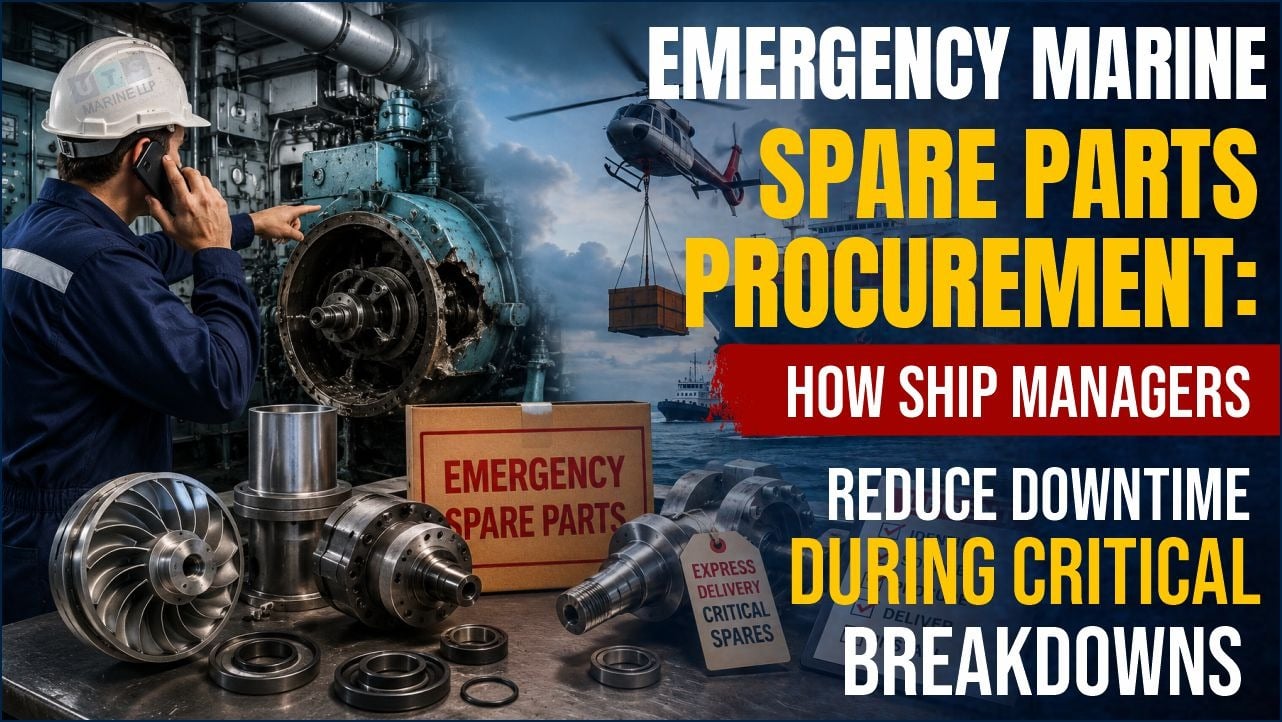
In the maritime industry, a vessel immobilized at sea or delayed in port due to an engine breakdown costs tens of thousands of dollars per day in charter party penalties, off-hire claims, and port fees. Emergency marine spare parts procurement is a high-stress, time-critical operation where efficiency is paramount.
What Happens During a Breakdown
When a critical component fails (e.g., a cracked cylinder head or a seized turbocharger bearing), the chain of events moves rapidly:
- The Chief Engineer assesses the damage and determines if on-board spares can fix it.
- If not, an urgent requisition is sent via satellite comms to the Technical Superintendent ashore.
- The Purchasing Department immediately blasts RFQs (Requests for Quotation) to OEM makers and independent suppliers (like UTS Marine LLP) specializing in ready-stock salvaged parts.
Information Procurement Teams Need
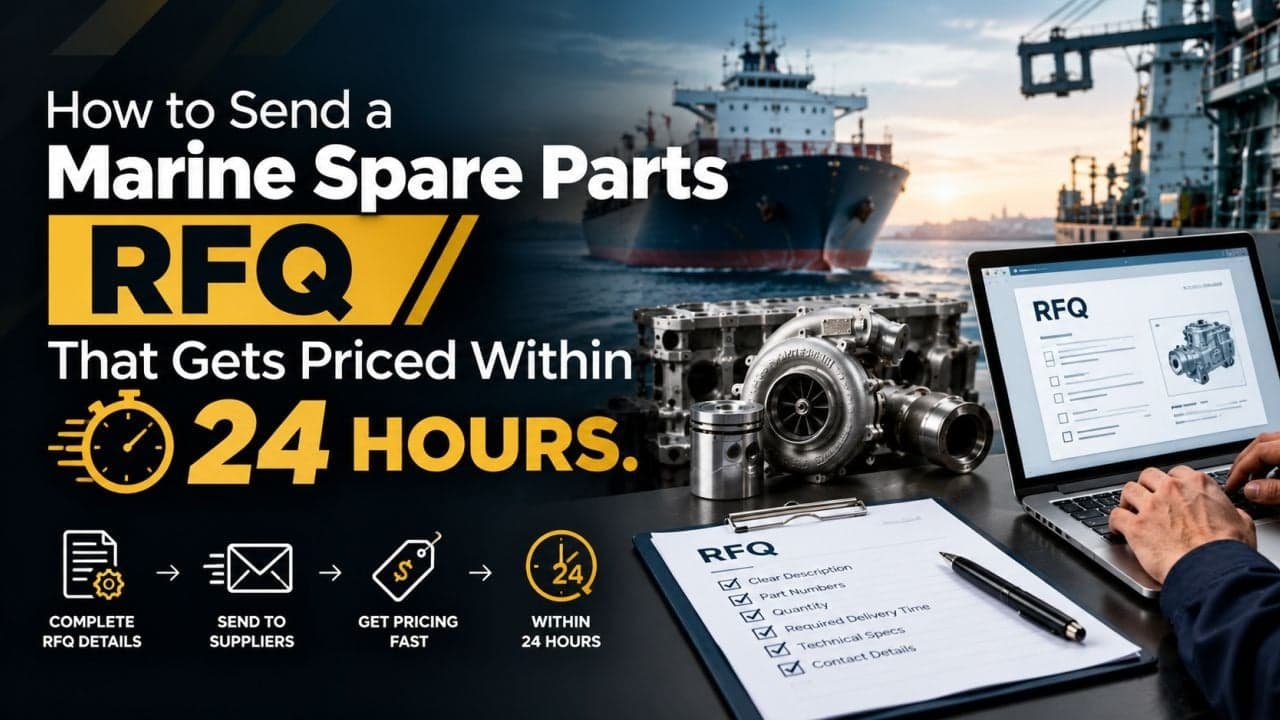
To prevent delays or the catastrophic mistake of shipping the wrong part across the world, procurement teams MUST provide:
- ✓ Exact Engine Model: (e.g., Wartsila 6L20, not just "Wartsila 20").
- ✓ OEM Part Number: Directly from the engine instruction manual.
- ✓ Engine Serial Number: Crucial for determining if the engine had factory design modifications.
- ✓ Photos of the Nameplate: The most reliable way to confirm specifications.
How Suppliers Verify Compatibility
At UTS Marine, when we receive an urgent RFQ for a major component (like a Yanmar crankshaft), we check the requested part number against our database of dismantled engines. We physically verify the stamping on the salvaged component, take micrometer readings of the journals, and send photos alongside the dimensional report back to the superintendent for immediate technical approval.
Common Procurement Mistakes
- Relying solely on descriptions: Asking for a "Daihatsu DK-20 piston" without specifying if it's the newer composite type or the older aluminum type.
- Ignoring logistics: A part might be cheap, but if it takes 14 days to clear customs in the supplier's country, the vessel's off-hire costs will dwarf the savings.
Case Example: Emergency Crankshaft Sourcing
A bulk carrier suffered a catastrophic main bearing failure, severely scoring the crankshaft of their MAN B&W L23/30 auxiliary generator in the middle of the Indian Ocean. The OEM lead time for a new crankshaft was 4 months. Within 24 hours, we located a standard-size salvaged crankshaft in our Alang warehouse, performed MPI testing, secured a class surveyor for certification, and air-freighted the 800kg crate to Singapore, allowing the vessel to repair the generator during its scheduled bunker stop.
Frequently Asked Questions
Is it safe to use salvaged parts for emergency repairs?Yes, provided the supplier performs rigorous Non-Destructive Testing (NDT) and the parts are within OEM wear limits. Critical items should always be backed by an IACS class certificate.
What is the fastest way to ship heavy engine parts?Air freight is the only option for emergencies. Heavy items like cylinder heads or blocks require custom wooden crates and must be booked on specialized cargo aircraft (like a Boeing 747 Freighter) rather than commercial passenger flights.