The Importance of Compression Testing
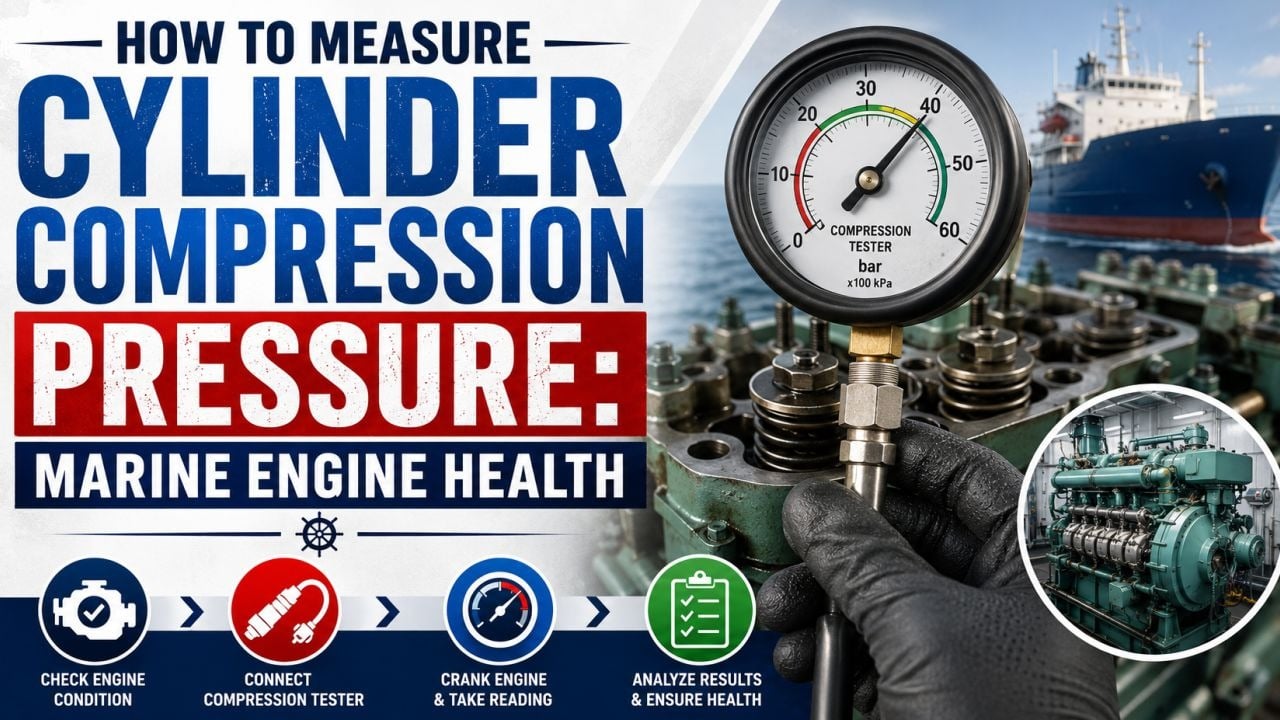
In a marine diesel engine, heat for ignition is generated entirely by the compression of air. If compression pressure drops, the air temperature won't be high enough to properly ignite the injected fuel. This results in late burning, high exhaust temperatures, black smoke, and a severe loss of power. For marine engineers, taking regular compression readings is the most reliable way to monitor the mechanical health of the cylinder liner, piston rings, and valves.
Equipment Required
Traditionally, engineers use a mechanical engine indicator (often called a Maihak indicator). This device attaches to the cylinder's indicator valve and uses a spring-loaded piston to draw a pressure-volume or pressure-crank angle diagram on paper. Modern vessels increasingly rely on electronic pressure transducers and digital combustion analyzers (like PMI or Lemag), which provide highly accurate, real-time digital curves on a laptop.
Test Procedure
To take a purely compression reading (without combustion interference), the fuel to the cylinder must be briefly cut off. Here is the standard mechanical procedure:
- Ensure the engine is running at a steady, normal load and RPM. Record scavenge air pressure and turbocharger RPM for reference.
- Blow through the indicator valve to clear any carbon or oil buildup.
- Attach the engine indicator tool securely.
- Cut off the fuel pump to the specific cylinder you are testing (lifting the pump roller or shutting the fuel inlet).
- Open the indicator valve and allow the stylus to draw the compression line on the indicator card.
- Close the valve, reinstate the fuel pump, and remove the tool.
Interpreting the Readings
Once you have the reading, compare it to the engine's shop trial data or baseline measurements taken when the engine was new. A drop in compression pressure is expected over thousands of running hours due to normal wear. However, a sudden drop across a single unit points to a specific mechanical failure.
Common Causes of Low Compression
- Piston Rings: Broken, stuck, or excessively worn rings allowing blow-by.
- Cylinder Liner: Excessive ovality or wear beyond limits.
- Valves: Burned or pitted exhaust valves failing to seat properly (on 4-stroke engines or uniflow 2-strokes).
- Head Gasket: A blown gasket leaking pressure into the cooling water or adjacent spaces.
Common Mistakes to Avoid
The most frequent mistake is failing to record the scavenge air pressure alongside the compression reading. Scavenge pressure adds directly to the final compression pressure. If the turbocharger is dirty and scavenge pressure is low by 0.2 bar, your final compression reading will also be artificially low, potentially leading you to tear down a cylinder for no reason. Always correct your readings against scavenge pressure and engine load.
Acceptance Criteria
Check your manufacturer's manual for specific limits, but a general rule of thumb for large slow-speed engines is that compression pressure should not drop more than 2 to 3 bar below the sea trial baseline (adjusted for current scavenge pressure). If it drops below this limit, it's time to schedule a cylinder overhaul.