Introduction
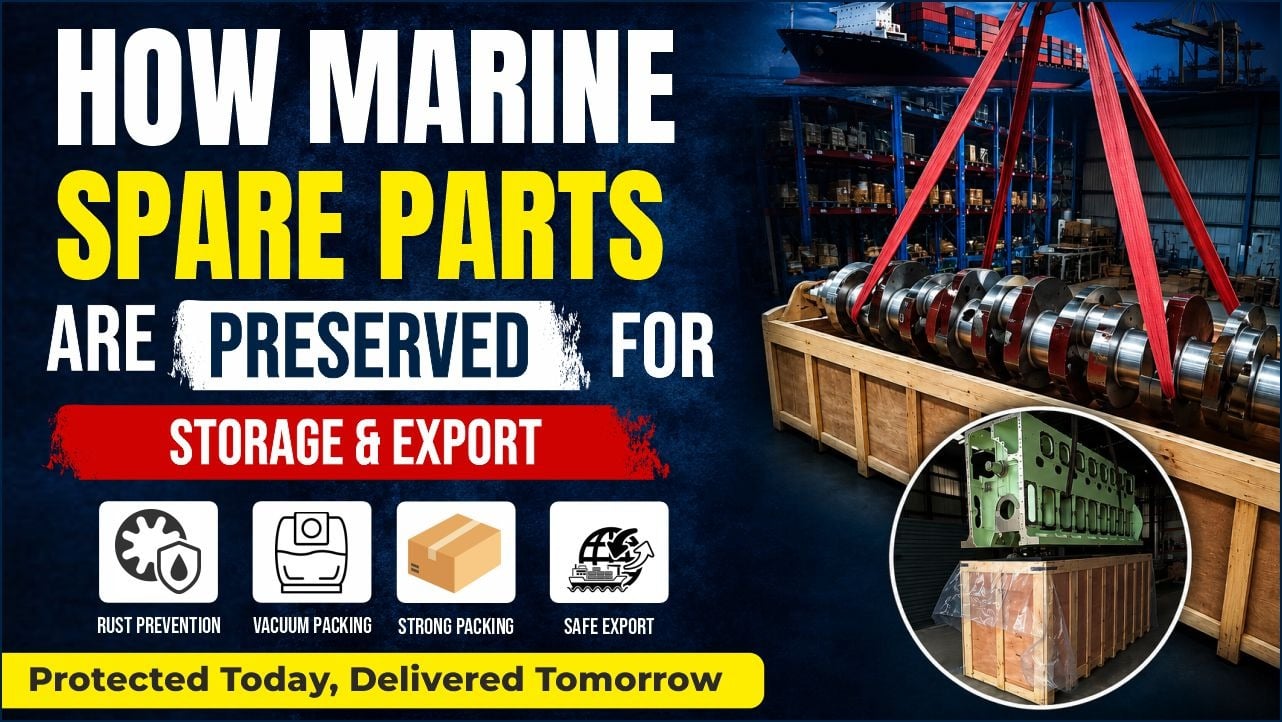
The journey of a marine spare part from a manufacturing facility or a ship recycling yard (like Alang) to a vessel's engine room can take months or even years. During this time, the component is subjected to severe environmental threats: fluctuating humidity, salt-laden sea air, and drastic temperature changes during global transit. Without meticulous marine spare parts preservation, precision-machined surfaces will succumb to flash rust, rendering expensive components like fuel injection pumps, bearings, and cylinder liners completely useless before they are even installed. For marine procurement teams and technical superintendents, understanding and demanding proper preservation protocols is essential to protecting their inventory investments.
Technical Explanation: The Science of Preservation
Preservation is the science of isolating a metal surface from moisture and oxygen, effectively halting the oxidation (rusting) process. Marine components require industrial-grade protection that goes far beyond standard packaging.
The most effective preservation strategies rely on a multi-layered approach:
- Cleaning and Degreasing: Before any preservative is applied, the part must be chemically cleaned to remove all fingerprints, acidic residues, and old oil. Even a single fingerprint can etch into polished steel over time.
- Liquid Rust Preventatives (Cosmoline/Tectyl): Heavy, waxy anti-corrosion compounds are sprayed or brushed onto the exposed metal surfaces. These compounds harden into a thick, moisture-proof barrier that is highly resistant to saltwater spray and atmospheric humidity.
- Volatile Corrosion Inhibitors (VCI): Precision parts are wrapped in VCI paper or placed in VCI plastic bags. These materials emit harmless chemical vapors that form a microscopic, protective layer on the metal surface, actively neutralizing corrosive elements in the trapped air.
- Desiccants and Barrier Foils: For export, parts are placed inside hermetically sealed aluminum barrier foil bags along with silica gel desiccant packs. A vacuum is pulled, removing all moisture-laden air before heat-sealing.
- Physical Protection: Finally, the part is secured in custom-built, fumigated wooden crates (ISPM-15 compliant) designed to prevent mechanical damage and micro-vibrations during shipping.
Real-World Observations: The Cost of Poor Packaging
During marine spare parts inspections, technical teams frequently encounter the devastating effects of inadequate preservation.
"One of the most common procurement mistakes occurs when purchasing heavily machined items like main engine crosshead pins. A ship owner purchased a reconditioned crosshead pin from a budget supplier who shipped it wrapped only in standard bubble wrap and newspaper. During the three-week sea voyage to the vessel, condensation formed inside the plastic. When the ship's engineers unboxed the part, they found deep pitting rust across the highly polished bearing journals. A $15,000 precision component was reduced to scrap metal because the supplier saved $50 on proper VCI packaging."
Technical teams know that preservation is not just about slapping grease on a part. It requires an understanding of metallurgy. Components with micro-clearances, such as fuel pump plungers and barrels, cannot be coated in heavy wax because cleaning them prior to installation would risk scratching the surfaces. They must rely almost entirely on VCI technology and vacuum sealing.
Common Mistakes in Spare Parts Storage
Procurement Mistakes
- Not Specifying Export Packaging: Assuming the vendor will automatically use marine-grade preservation. Procurement must explicitly demand VCI wrapping and barrier foil in the purchase order.
- Buying 'Shelf-Worn' Stock: Purchasing parts from traders who have stored components in un-climate-controlled warehouses for years without periodic re-preservation.
Inspection Mistakes
- Breaking the Seal: Engineers opening a vacuum-sealed, VCI-protected package just to "check" the part, and then putting it back on the shelf unsealed, allowing moisture to enter.
- Ignoring Desiccant Color: Failing to check the humidity indicator cards inside storage boxes. If the desiccant has turned pink (saturated), the part is actively at risk of rusting.
Storage Mistakes
- Vibration Damage: Storing heavy parts (like ball bearings or turbocharger rotors) directly on steel decks near the engine. The constant vibration of the ship causes "false brinelling" (micro-indentations) on the bearing surfaces.
- Wood Contact: Allowing bare metal parts to rest directly against wooden crates. Wood holds moisture and contains natural acids that rapidly accelerate localized corrosion.
Installation Mistakes
- Improper Cleaning: Failing to properly remove the heavy waxy preservative (Cosmoline) using the correct solvents before installation, leading to clogged oil galleries and bearing starvation.
- Using Abrasives: Using emery cloth or wire brushes to clean off preservation grease, destroying the precision surface finish.
Practical Checklist: Preserving and Storing Marine Spares
Whether preparing parts for export or storing them onboard, follow this checklist:
- Thorough Cleaning: Degrease the component completely using an industrial solvent and dry it with lint-free cloths. Wear nitrile gloves to prevent fingerprint transfer.
- Apply Preservative: Coat all unpainted, machined surfaces with a recognized marine-grade rust preventative (e.g., Tectyl 506). Leave thin oil films for delicate hydraulic parts.
- Wrap in VCI: Wrap the entire component tightly in VCI paper. The active side of the paper must face the metal.
- Vacuum Seal: Place the wrapped part and calculated desiccant packs into an aluminum barrier foil bag. Vacuum the air out and heat-seal the edges.
- Secure Boxing: Place the sealed bag into a sturdy, ISPM-15 certified wooden crate. Chock the item securely so it cannot shift during heavy seas.
- Labeling: Label the outside of the box clearly with the part name, OEM number, date of preservation, and a warning: "Do Not Open Until Ready for Installation."
Real-World Marine Maintenance Example
A bulk carrier was preparing for a dry dock and had ordered a complete set of main engine cylinder liners six months in advance. The chief engineer instructed the crew to store them in the steering gear room. Because the crew did not realize the importance of the factory VCI packaging, they tore open the plastic wrapping to inspect the liners and left them exposed. Over the next six months, the humid, salt-heavy air of the steering gear room caused severe surface rust to bloom inside the honed cylinder bores. Before the liners could be used in dry dock, the ship owner had to pay a specialized local workshop to re-hone the inner surfaces, delaying the overhaul by two days.
FAQ Section
What is VCI and how does it work? VCI stands for Volatile Corrosion Inhibitor. It is a chemical compound infused into paper or plastic that slowly vaporizes. The vapor molecules attach themselves to metal surfaces, creating an invisible shield that blocks moisture and oxygen from causing rust.
How long can a properly preserved marine part be stored? If cleaned, coated with a rust preventative, wrapped in VCI, and vacuum-sealed in a barrier foil bag with desiccants, a marine part can safely be stored for 3 to 5 years without degrading.
How do I remove heavy preservation wax before installation? Never use abrasive pads. Use a dedicated industrial degreaser, kerosene, or diesel fuel and a soft bristle brush to dissolve the wax. Ensure all oil galleries are blown through with compressed air to remove any remaining residue.
Can I store spare parts in the engine room? While convenient, the engine room is hot, humid, and vibrates constantly. Delicate parts (like electronics, bearings, and fuel injection equipment) should be stored in a climate-controlled, vibration-damped dedicated spare parts room.
Does stainless steel need preservation? Yes. While highly resistant to rust, "stainless" steel is not stain-proof. In a harsh marine environment with high chlorides (salt), even stainless steel can suffer from pitting and crevice corrosion if left unprotected.
Conclusion
Effective marine spare parts preservation is the invisible shield that protects a ship owner's inventory investment. The finest OEM engineering is rendered worthless if a component is destroyed by atmospheric corrosion while sitting on a shelf. By demanding rigorous export packaging standards from suppliers and maintaining strict storage protocols onboard, technical teams ensure that their critical spares are in pristine, ready-to-run condition the moment they are needed.
At UTS Marine LLP, we understand that how a part is packed is just as important as how it was manufactured. We employ industry-leading preservation, VCI wrapping, and custom crating techniques to ensure that whether a component is shipping across the port or across the globe, it arrives in perfect operational condition.
Internal Linking Suggestions
- [Link: How Marine Engineers Identify Genuine OEM Spare Parts Before Installation]
- [Link: Alang Ship Breaking Yard: The World's Largest Source of Used Marine Spare Parts]
- [Link: New vs Reconditioned Marine Engine Parts: How to Choose the Right Option for Your Vessel]