The Stress of a Dead Engine
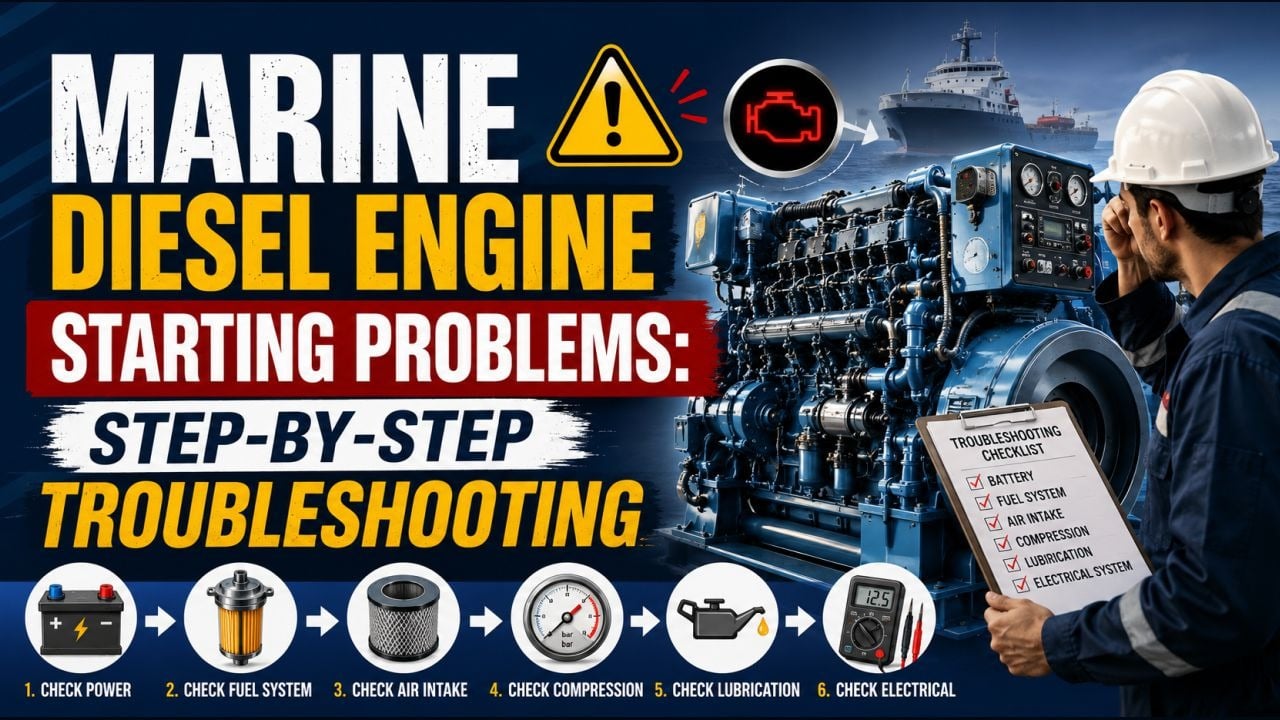
When you press the start button on the bridge or in the engine control room and the main engine fails to turn over—or turns but refuses to fire—the clock starts ticking. Marine engine starting problems usually happen at the worst possible time: during maneuvering. A methodical, calm approach to troubleshooting is essential for engineers to quickly restore power.
Starting Air System Faults
Large marine engines use compressed air at 30 bar to physically push the pistons down and turn the engine. If the engine won't turn at all, start here.
- Low Pressure: Check the starting air receivers. Is the pressure actually at 30 bar? Are the compressors running?
- Valve Position: Is the main starting air valve open? Are the manual isolation valves closed from previous maintenance?
- Control Air: The pilot valves require control air (usually 7 bar) to operate the main starting valves. Check the control air pressure.
- Turning Gear: The interlock prevents starting if the turning gear is engaged. Ensure it is fully disengaged and the limit switch is clear.
Fuel System Issues
If the engine turns on air vigorously but fails to fire and run on fuel, the issue is almost certainly in the fuel delivery system.
- Fuel Pressure: Check the booster pump pressure. If it's low, switch to the standby pump.
- Air in the System: This is a very common issue after filter changes. Vent the fuel system thoroughly at the highest point (usually the heater or fine filter) and at the fuel pumps.
- Governor Linkage: Is the governor actually pulling the fuel racks open? Check if the linkage is binding or if the governor has tripped.
- Emergency Stop: Ensure all emergency stop buttons (local, ECR, and bridge) are reset. A tripped shutdown system keeps the fuel racks at zero.
Compression and Temperature
A diesel engine relies on heat of compression to ignite the fuel. If the engine turns, gets fuel, but still emits white smoke and doesn't run, it lacks heat.
- Cold Engine: Is the jacket cooling water pre-heated? Trying to start a heavy fuel engine with cold jacket water is nearly impossible.
- Low Compression: Stuck piston rings or leaking valves can drop compression too low for ignition.
Battery & Control System (Auxiliary Engines)
For auxiliary generators started by batteries or electric motors:
- Check battery voltage under load. A battery might show 24V at rest but drop to 10V when the starter engages.
- Inspect starter motor solenoid contacts and earth connections.
Emergency Diagnosis Workflow
- Observe: Does it turn on air? Yes = Fuel/Compression issue. No = Air/Interlock issue.
- Check Interlocks: Turning gear, emergency stops, low lube oil pressure trips.
- Check Pressures: Starting air, control air, fuel booster pressure.
- Manual Override: Try starting the engine from the local emergency control stand to bypass remote automation faults.
By following this workflow, engineers can isolate the root cause within minutes rather than tearing into the wrong system while the vessel drifts.