Introduction
A sudden drop in main lubricating oil pressure is the quickest way to destroy a marine diesel engine. The lubrication system does more than just reduce friction; it is the primary cooling medium for pistons and bearings. Troubleshooting lube oil issues requires a methodical approach to prevent catastrophic failures like wiped bearings or scuffed cylinder liners.
Purpose of the Lubrication System
Beyond creating a hydrodynamic film between moving surfaces (like the crankshaft journals and main bearings), the LO system neutralizes acidic combustion byproducts, flushes away wear particles, and removes excess heat from the piston crown. Without steady flow and pressure, thermal expansion happens in seconds, leading to metal-to-metal seizure.
Oil Flow Through a Marine Diesel Engine
Understanding the circuit is critical for isolation. Oil is drawn from the sump by the main LO pump, pushed through the LO cooler and automatic backflush filters, and enters the main engine gallery. From there, it branches to the main bearings, up through the crankpin to the connecting rod, into the crosshead (or piston pin in trunk piston engines), and sprays the underside of the piston crown for cooling before draining back to the sump.
Reasons for Low Oil Pressure
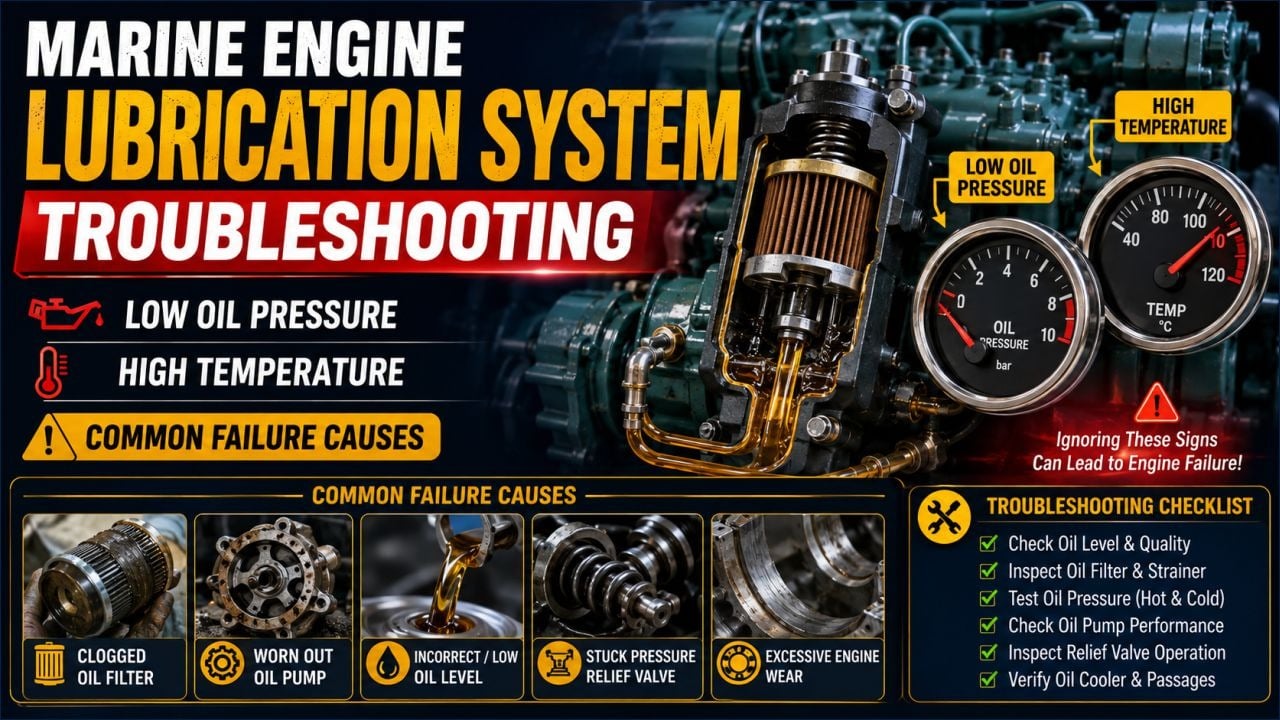
A low pressure alarm usually originates from one of the following mechanical faults:
- Excessive Bearing Clearances: Worn main or big-end bearings allow oil to escape the hydrodynamic wedge too quickly, dropping system pressure downstream.
- Defective Pressure Relief Valve: A stuck-open bypass or relief valve on the main pump diverts oil back to the suction side rather than pushing it into the engine gallery.
- Air Ingress: A cracked suction pipe in the sump or a worn pump shaft seal draws air into the system, causing cavitation and pressure fluctuations.
- Dilution: Fuel oil leaking into the LO sump drops the oil viscosity drastically, reducing its ability to hold pressure.
High Lubricating Oil Temperature
High LO temperature directly reduces viscosity. If the LO cooler is functioning but temperatures remain high, suspect internal engine friction (failing bearings) or blow-by from worn piston rings heating the oil film on the liner walls. Always check the cooling seawater flow and the thermostatic bypass valve position at the cooler.
Oil Contamination
Contamination destroys bearings faster than normal wear.
- Water in Oil: Forms an emulsion, reducing load-carrying capacity. Often caused by leaking jacket water O-rings or LO cooler tube failures.
- Fuel in Oil: Lowers flashpoint and viscosity. Usually originates from leaking fuel pump plunger barrels or defective injector O-rings.
- Solid Particulates: Cat-fines, rust, or bearing white metal flakes. Requires immediate purifier throughput adjustments and lab analysis.
Pump Failures and Filter Blockage
Gear or screw pumps wear over time. Check the axial clearances of the pump rotors. If automatic filters are constantly backflushing, it indicates heavy sludge formation or a failing bearing shedding metal. Never bypass a blocked filter without identifying the source of the debris.
Diagnostic Workflow
- Verify the pressure gauge reading against a calibrated local gauge.
- Check the LO sump level and temperature.
- Sample the oil and conduct a visual/smell test (check for fuel smell or water emulsion).
- Inspect the automatic filter backflush counter and open the manual bypass strainer to check for white metal flakes.
- Test the LO pump relief valve setting and thermostatic valve operation.
Inspection Checklist
- ✓ Main LO pump suction strainer cleanliness
- ✓ LO cooler tube differential pressure
- ✓ Purifier throughput and bowl sludge condition
- ✓ Crankcase inspection for hot spots or excessive bearing end-play
- ✓ Cylinder lubricator feed rates (if applicable)
Frequently Asked Questions
How do I test for water in the lube oil onboard?Use a water-in-oil test kit which utilizes a chemical reagent (like calcium hydride) reacting with water to produce hydrogen gas. The resulting pressure in the test vessel indicates the water percentage.
What is the normal operating viscosity for marine diesel crankcase oil?Most medium-speed trunk piston engines use SAE 40 oil, which operates around 13-15 cSt at 100°C. Heavy fuel operation requires a higher Base Number (BN) to neutralize acids.
Why is the LO purifier running constantly?Continuous purification is required to handle the soot, wear metals, and water that constantly enter the sump during normal operation. Batch purification is insufficient for modern highly-rated engines.