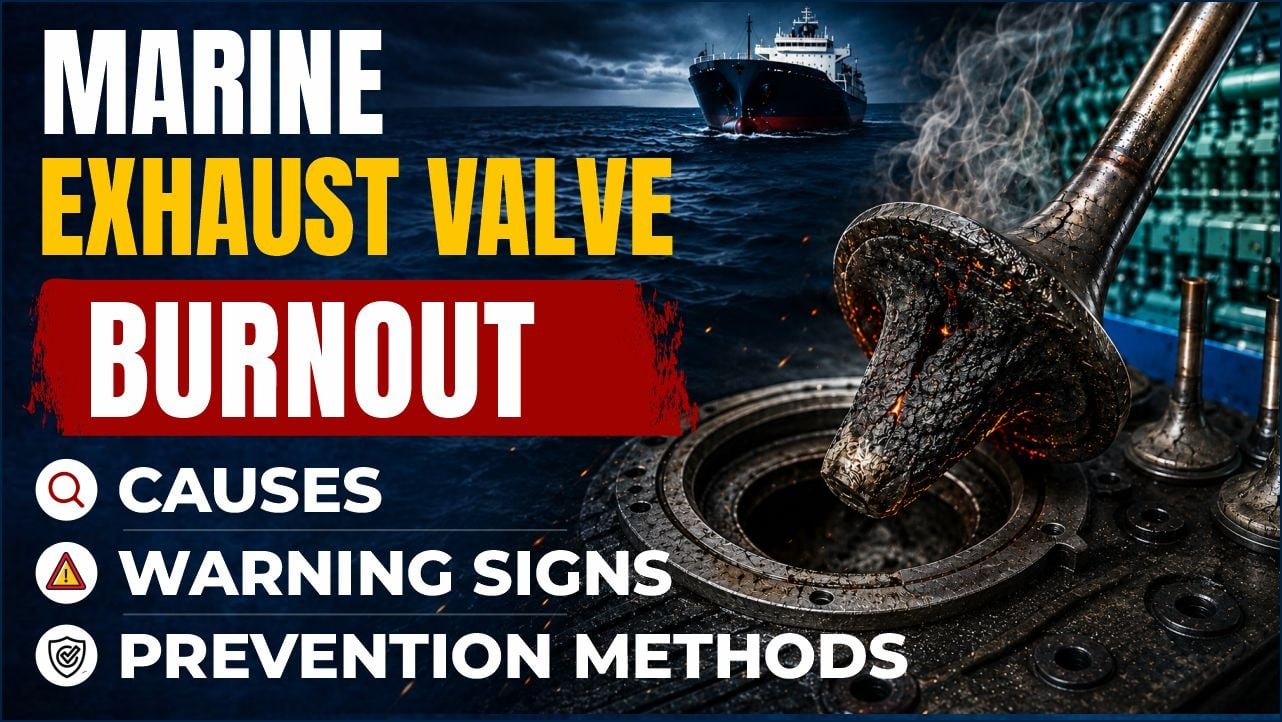
A marine exhaust valve failure is a catastrophic event stemming from high-temperature corrosion and poor combustion. Burnout occurs when vanadium and sodium in fuel create deposits that prevent the valve from sealing. Engineers must monitor exhaust temperatures and implement regular rotation mechanisms to prevent localized overheating and ensure reliability.
Key Takeaways
- Vanadium-sodium complexes in heavy fuel oil melt at high temperatures, initiating the hot corrosion process.
- Sudden deviations in exhaust gas temperature are the earliest indicators of a leaking valve.
- Maintaining proper fuel purification is your first line of defense against burnout.
- Hydraulic valve rotators ensure even thermal distribution and must be inspected regularly.
Pre-Maintenance Inspection Checklist
Before overhauling an exhaust valve, ensure you have ticked off these critical prerequisites:
- [ ] Temperature Monitoring: Verify exhaust gas temperatures across all cylinders.
- [ ] Fuel Analysis: Check recent bunker reports for vanadium and sodium content.
- [ ] Purifier Operation: Ensure fuel oil purifiers are running at optimum efficiency.
- [ ] Rotator Function: Visually confirm valve rotation during engine operation.
- [ ] Tappet Clearance: Measure and adjust hydraulic or mechanical clearances.
The Mechanics of Exhaust Valve Burnout
You cannot ignore the chemical realities of burning heavy fuel oil. When combustion temperatures rise, vanadium and sodium react to form corrosive ash deposits on the exhaust valve face. These deposits prevent the valve from seating correctly. High-pressure, high-temperature combustion gases then channel through this microscopic gap, acting like a cutting torch on the valve material.
This localized overheating rapidly destroys the valve seating surface. If left unchecked, the blow-by gases will cause a complete marine exhaust valve failure. The resulting loss of compression drastically drops cylinder power output and forces the other cylinders to overcompensate.
Early Warning Signs You Cannot Ignore
Engines always communicate their problems before failing. A sharp, unexplained rise in the exhaust gas temperature for a single cylinder is the most reliable indicator of a leaking valve. You may also notice a drop in the peak firing pressure during your regular indicator card analysis.
Secondary signs include engine surging, a noticeable drop in turbocharger efficiency due to lost exhaust gas energy, and increased smoke at the funnel. Relying solely on your alarm system is dangerous; you must proactively trend this data.
Proven Prevention Methods
Prevention starts in the purifier room. Maintain your fuel oil separators at maximum efficiency to remove water and solid impurities, which limits the sodium content. When bunkering fuels high in vanadium, utilize fuel additives designed to raise the melting point of vanadium complexes, stopping them from sticking to the valve.
Ensure your cooling water system maintains the exact parameters specified by the engine manufacturer. Proper cooling of the valve seat prevents the metal temperatures from reaching the critical threshold where hot corrosion begins. Finally, strictly adhere to your overhaul schedule. Use Nimonic valves for extreme conditions, as they offer superior resistance to high-temperature corrosion compared to standard steel alloys.
Frequently Asked Questions
What causes high exhaust temperatures in marine engines?
High exhaust temperatures result from leaking exhaust valves, late fuel injection timing, fouled turbochargers, or restricted scavenge air flow. Always check the fuel timing and turbocharger condition if temperatures rise across multiple cylinders.
How do exhaust valve rotators prevent burnout?
Rotators turn the valve slightly during every stroke. This ensures an even temperature distribution across the valve face and prevents the buildup of localized carbon or ash deposits that lead to blow-by and burnout.
Can fuel additives prevent valve failure?
Yes, specific chemical additives alter the ash composition during combustion. They raise the melting point of corrosive vanadium-sodium complexes so they blow out with the exhaust gas instead of sticking to the valve seat.