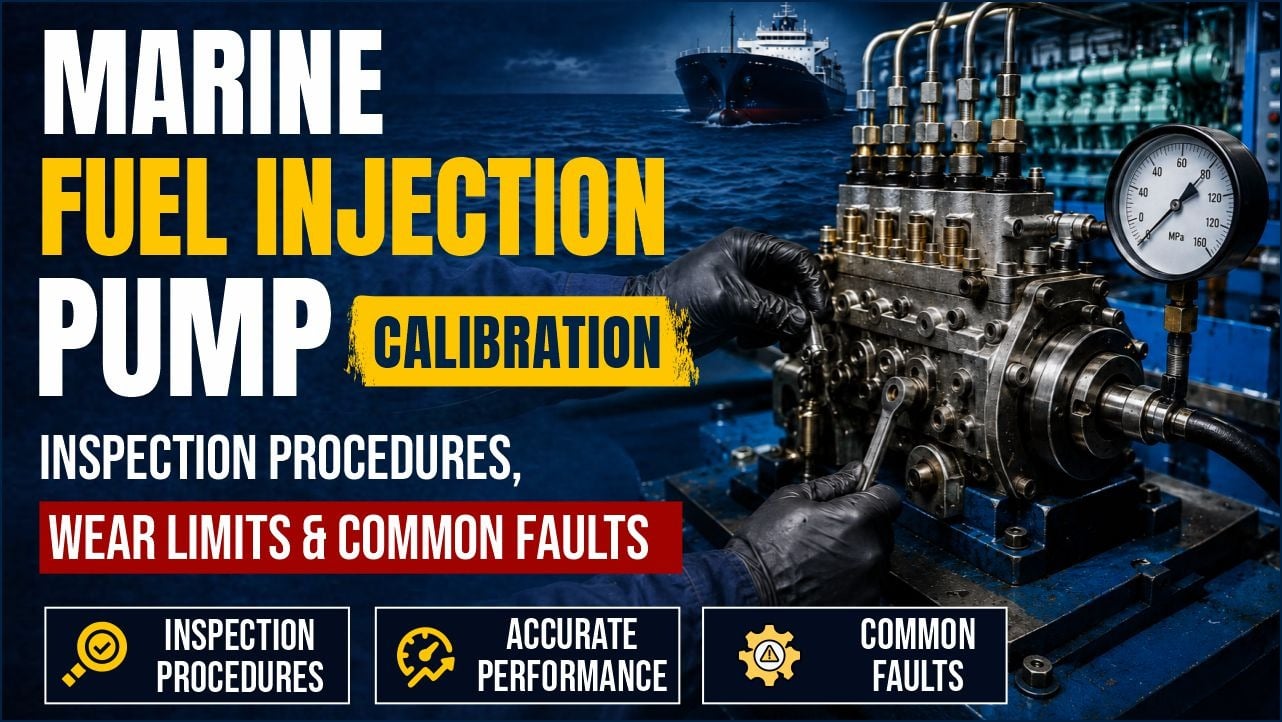
Precise marine fuel injection pump calibration ensures optimal combustion timing and exact fuel delivery to every cylinder. Misaligned pumps cause excessive exhaust temperatures, mechanical stress, and wasted fuel. Engineers achieve accurate calibration by measuring plunger lift and barrel wear, restoring the engine's power balance and reducing emissions.
Key Takeaways
- Uneven fuel delivery across cylinders leads to severe crankshaft torsion and bearing damage.
- Plunger and barrel clearances are measured in microns; slight wear drastically reduces injection pressure.
- Always use a dedicated timing tool and the manufacturer's specific lift data for calibration.
- Fuel leaks into the camshaft lubricating oil indicate immediate pump overhaul requirements.
Calibration Preparation Checklist
Before dismantling the fuel pump, ensure these safety and procedural steps are complete:
- [ ] Engine Isolation: Confirm engine is stopped, immobilized, and fuel pressure is bled off.
- [ ] Tools Ready: Gather specific manufacturer timing tools, dial gauges, and feeler gauges.
- [ ] Clean Environment: Wipe down the entire pump housing to prevent dirt ingress during inspection.
- [ ] Data Verification: Have the shop test records and acceptable wear limits readily available.
- [ ] Safety Gear: Wear appropriate PPE to protect against high-pressure residual fuel.
The Impact of Incorrect Pump Calibration
You cannot run an efficient engine with imbalanced fuel delivery. When one cylinder receives more fuel than the others due to faulty marine fuel injection pump calibration, it generates higher peak pressures. This uneven load physically twists the crankshaft, destroying main bearings and potentially fracturing the shaft.
Late injection timing causes fuel to burn in the exhaust manifold, skyrocketing exhaust temperatures and burning out valves. Early timing creates knocking and extreme mechanical shock. Calibration is the only way to synchronize the entire engine.
Step-by-Step Inspection Procedures
Accuracy demands absolute cleanliness. Any microscopic debris entering the pump barrel will score the plunger. Disassemble the pump in a clean, well-lit workshop.
Measuring Plunger and Barrel Wear
The clearance between the plunger and barrel dictates the pump's ability to generate pressure. Inspect the plunger helix for erosion or deep scoring caused by catalytic fines in the fuel. If you observe visual scuffing or if the clearance exceeds the manufacturer's tight micron limits, replace the assembly. You cannot repair a worn barrel.
Checking Spill Timing and Lift
Mount the pump on the engine and install your dial gauge on the plunger. Rotate the engine to locate the exact point where the plunger covers the spill port. Compare this angular reading with the manufacturer's baseline. Adjust the tappet shims to raise or lower the plunger, ensuring the injection timing matches the manual perfectly.
Identifying Common Faults
Sticking plungers occur when fuel temperatures rise too rapidly, expanding the plunger faster than the barrel. Always heat heavy fuel oil gradually. If you discover fuel oil mixing with the camshaft lubrication oil, inspect the pump's lower O-rings and umbrella seals immediately. Delaying this repair will destroy the camshaft bearings.
Frequently Asked Questions
How do you know when a fuel injection pump needs calibration?
Signs include uneven exhaust temperatures across cylinders, difficulty starting the engine, increased fuel consumption, black smoke at the funnel, and noticeable engine vibration due to power imbalance.
Can fuel pump plungers be repaired?
No. Plungers and barrels are precision-machined as a matched pair. If either component suffers from wear, scoring, or corrosion, you must replace both as a single unit.
What is spill timing?
Spill timing is the precise moment the rising pump plunger closes the spill port, trapping the fuel and beginning the high-pressure injection process. It determines the start of combustion in the cylinder.