Introduction
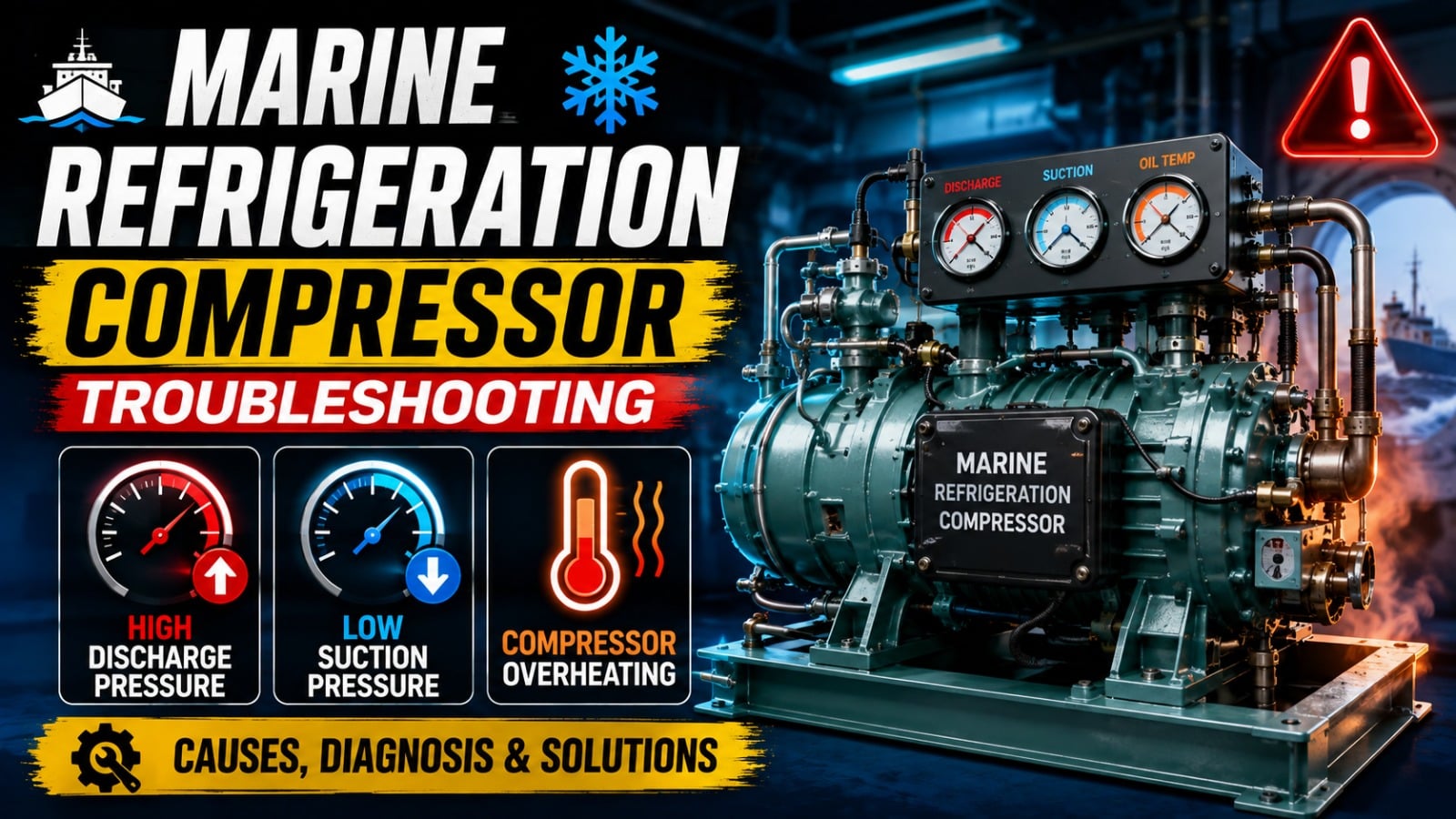
Refrigeration problems on a ship rarely announce themselves politely. The first sign is usually a chief cook complaining about softening vegetables, or a compressor that is running non-stop and still cannot hold the meat room at -20°C. By the time anyone looks at the gauge panel, the plant has often been quietly losing capacity for days.
What makes provision refrigeration different from most engine room machinery is that the fault usually shows up first as a pressure or temperature abnormality — high discharge pressure, low suction pressure, a compressor running hot — and the real cause is somewhere else entirely. A fouled condenser reads as "compressor trouble". An iced-up evaporator fan reads as "short of gas". This article walks through the system as it actually behaves on board, then takes the three most common complaint categories one by one.
How a Marine Refrigeration Compressor System Works
Every provision plant on board — whether it runs R404A, R134a, an older R22 charge, or one of the newer retrofit blends — follows the same four-stage cycle:
- Compressor: Suction gas from the evaporator is compressed to a pressure where it can condense at sea water temperature. This is the heart of the plant and the most expensive part in it.
- Condenser: Sea water or air removes the heat picked up in the rooms plus the compression heat. Refrigerant leaves as a high-pressure liquid.
- Expansion device: A thermostatic or electronic expansion valve drops the pressure and meters liquid into the evaporator based on superheat at its sensing bulb.
- Evaporator: The refrigerant boils at low temperature, pulling heat out of the room air through finned coils and fans. The gas returns to the compressor, and the cycle repeats.
Sit between the gauge panel and the plant for ten minutes and you can read the whole story: discharge pressure tells you how hard the condenser is working, suction pressure tells you what the evaporator and expansion valve are doing, and the temperature difference across each part tells you where the restriction or shortage sits. A healthy plant holds condensing around 35–45°C equivalent pressure, keeps a few degrees of subcooling at the liquid line, and runs about 5–8 K superheat at the evaporator outlet.
High Discharge Pressure
High head pressure means the condenser cannot reject the heat being handed to it, or something that should not be there is taking up space. Work through these in order of likelihood:
Fouled Condenser
Sea water condensers foul with slime, shell, and scale. The tell is a narrowing temperature approach — the refrigerant condensing temperature climbs closer and closer to the cooling water outlet temperature. Clean the condenser when the approach is roughly half of what it used to be. Do not wait for the safety cutout.
Poor Sea Water Flow
Check the strainer first — it is the part nobody cleans because it is behind the pump. A half-choked sea water strainer, a worn pump impeller, or a throttled valve gives you exactly the same gauge picture as a fouled condenser. Compare cooling water inlet and outlet temperatures: a small temperature rise across the condenser with high discharge pressure means flow is short, not heat transfer.
Air in the System
Non-condensables from a past low-pressure leak or sloppy charging settle in the condenser and stack up on top of the refrigerant, pushing head pressure up and adding a few degrees of useless subcooling-looking behaviour. If the plant has been opened for repairs and the head pressure has never been right since, purge properly rather than topping up and hoping.
Overcharge of Refrigerant
Someone added gas "until the bubbles stopped" and now the condenser is holding liquid it cannot deal with. Liquid backed up in the condenser raises head pressure and starves the expansion valve at the same time — an overcharged plant can show high head and poor room temperatures together. Recover the excess; do not vent it.
High Sea Water or Ambient Temperature
Transiting the Red Sea or the Gulf changes the arithmetic. Head pressure that alarmed in Northern Europe may be simply what the plant does at 32°C sea water. Check the maker's curve before condemning anything.
Low Suction Pressure
Low suction pressure means the compressor is pulling harder than the evaporator can feed it. The rooms warm up because capacity has collapsed, and the plant often runs continuously because the low-pressure switch keeps resetting.
Refrigerant Shortage
The most common fault in the list, usually from a slow leak. Look for oil stains at flare joints, valve stems, and around the compressor shaft seal — refrigerant carries oil with it, so every leak leaves a residue. A sight glass full of bubbles with a warm liquid line says shortage; a cold liquid line with frost at the expansion valve inlet says restriction instead.
Restricted Expansion Device or Filter Drier
Measure temperature across the filter drier. More than about 1–2 K drop means the drier is choking and needs renewal. A expansion valve with a lost sensing bulb charge closes itself — the plant starves, suction falls, and the valve body frosts back toward the liquid line. Swap the bulb and power head before condemning the whole valve.
Poor Evaporator Air Flow
Evaporator fans stopped, iced-up coils, or blocked return air paths all starve the coil of heat load. Icing brings its own chain of suspects: defrost heaters burnt out or their contactors failed, door gaskets leaking humid air, drain lines frozen solid so melt water refreezes across the coil. Fish rooms that get hosed down are the usual repeat offenders.
Ice Formation
Distinguish "normal light frost at the valve" from "the coil is a solid block". A blocked coil behaves like a shortage — low suction, low superheat readings at the bulb, warm rooms. Manual defrost with the fans running, fix the gasket or drain, and check the defrost timer actually completes its cycle.
Compressor Overheating
A compressor running hot is a symptom, and every hour at high temperature costs oil life and motor insulation. The three usual drivers:
- Running at low suction for long periods: low mass flow through a semi-hermetic compressor means the suction gas does less cooling of the motor. A plant short of gas overheats its compressor while the rooms stay warm — a genuinely expensive combination.
- High superheat: a starving expansion valve or a long, uninsulated suction line sends hot gas back to the compressor. Discharge temperatures above about 120°C start breaking down oil; above 130°C you are on borrowed time.
- Leaking suction or discharge valves: hot re-expansion gas pumps back and forth every stroke. The plant loses capacity, discharge temperature climbs, and the compressor efficiency test — pull a vacuum on the isolated compressor and watch whether it holds — tells the truth about the valve plates.
Check the crankcase heater is energised during off cycles. Without it, refrigerant condenses into the oil sump, and the next start throws oil foam out of the compressor — a classic way to lose bearings and oil pressure together.
Oil-Related Problems
Oil and refrigerant part company badly at low temperature, so provision plants need help keeping oil moving. Watch for:
- Oil logging in the evaporator: low room temperatures and slow gas velocities let oil pool in coils, killing heat transfer. Signs are low oil level in the compressor crankcase with an oily film in the sight glass. A properly sized oil separator and correct superheat are the fixes, not endless top-ups.
- Oil pressure safety cutout trips: the differential switch watches oil pressure minus crankcase pressure, not absolute pressure. Dirty oil strainers, worn oil pump parts, or oil foaming after flood-back all trip it. Find out which before resetting.
- Wrong oil after a service: mixing oil types in a plant that has been converted to a newer refrigerant is a slow-motion failure. Check what is actually in the compressor before adding from an unlabelled can.
Inspection Procedure
- Log the gauge picture first. Suction and discharge pressures, room temperatures, liquid line sight glass, compressor run pattern. Compare against the ship's commissioning figures or the plate data, not memory.
- Measure real temperatures. Superheat at the evaporator outlet, subcooling at the liquid line, temperature drop across the filter drier, approach at the condenser. Four thermometer readings locate most faults without opening the system.
- Check the sea water side. Strainer, flow, inlet/outlet temperatures at the condenser. Cheapest checks first.
- Walk the plant for leaks. Electronic detector at every flare, valve stem, and shaft seal; soap solution where the detector keeps alarming; oil stains as the historical record of every leak you have not found yet.
- Test the compressor. Isolate and pull a vacuum on the compressor alone — leaking valve plates will not hold. Megger the motor windings while you are there, and check contactor tips for pitting and single-phasing evidence.
- Verify the controls. HP/LP cutout settings, defrost timer operation, fan rotation and current, thermostat and solenoid behaviour, and the TXV sensing bulb actually strapped tight to the pipe with proper clamps and insulation.
Troubleshooting Matrix
Symptom Likely Cause Recommended Check High discharge pressure, plant short of capacity Fouled condenser or poor sea water flow Condenser approach temperature; sea water strainer, pump, and flow High discharge with bubbles in sight glass and poor cooling Non-condensables or overcharge Purge properly; check charge weight against nameplate Low suction, warm rooms, frost back to valve Refrigerant shortage from a leak Oil stains at joints; leak detection; sight glass bubbles Low suction with cold liquid line Choked filter drier or failed TXV bulb charge Temperature drop across drier; compare bulb and line temperatures Low suction, coil iced solid Defrost failure, door gasket leak, blocked drain Defrost heater and timer; gaskets; drain line condition Compressor discharge temperature high Low suction running, high superheat, or leaking valves Superheat measurement; compressor vacuum-hold test Oil pressure cutout trips after start Oil foaming from flood-back; worn oil pump; choked strainer Crankcase heater operation; oil strainer; differential pressure test Compressor short-cycles Low charge, dirty condenser, or faulty LP switch differential Gauge picture through one full cycle; switch settingsMaintenance Checklist
Daily
- Log suction and discharge pressures, room temperatures, and compressor run hours.
- Glance at the sight glass — steady liquid, no bubbles, no oil streaking.
- Listen to the compressor. A change in the knock or the rhythm is data.
Weekly
- Clean sea water strainers and check cooling flow.
- Check defrost heaters and timers complete their cycle.
- Inspect door gaskets and drain lines in every provision room.
Monthly
- Superheat and subcooling measurements against the ship's baseline.
- Megger compressor motor windings and record the trend.
- Check contactors, overloads, and control wiring terminations.
6-Monthly / Opportunity
- Filter drier renewal on any sign of pressure drop or after any system opening.
- Condenser cleaning based on approach temperature trend.
- Compressor efficiency test (vacuum hold) and oil condition check — acidic or dark oil means a full oil and drier change, then find out why.
For reconditioned and genuine compressors, valve plates, gasket sets, shaft seals, and control components for marine provision plants, see our refrigeration compressor spares range — we stock parts for Bitzer, Copeland, Sabroe, and the common marine reefer plants.
Frequently Asked Questions
Why does my plant run fine in Northern Europe but struggle in the Gulf?
Sea water temperature changes the condensing pressure, and the room heat load climbs with ambient temperature. The compressor works a longer hour-count against a higher head pressure. Check the maker's performance curve for the actual conditions before assuming a fault — then still clean the condenser, because fouling hides inside every curve.
Should I keep adding refrigerant when the sight glass shows bubbles?
No. Bubbles mean shortage, restriction, or flashing in the liquid line — three different fixes. Measure the temperature drop across the filter drier and the liquid line first. Adding gas to a plant with a choked drier simply raises head pressure and wastes the charge.
How much superheat is correct at the expansion valve?
For a standard thermostatic valve on a provision plant, aim for roughly 5–8 K at the evaporator outlet. Persistent high superheat starves the coil and overheats the compressor; near-zero superheat risks liquid slugging back to the compressor. Adjust gradually and recheck after the plant settles.
Can I run the plant with one compressor of a pair taken off line?
Usually yes, at reduced capacity — check the plant design, because some arrangements share oil systems or have interlocked sequencing. What you cannot do is run a compressor with its oil pressure safety circuit bypassed; that switch has saved more compressors than any other device in the plant.
What is the fastest way to tell a gas shortage from an iced-up coil?
Frost pattern and liquid line temperature. A shortage frosts the expansion valve and suction line with a warm, nearly clear liquid line; an iced coil shows superheat readings near the bulb that make no sense with a normal charge. Measure across the drier and at the coil outlet — two thermometer readings settle the argument.
How do I test compressor valve plates without stripping the compressor?
Isolate the compressor with its service valves, run it briefly to pull a vacuum, and close the suction. A healthy valve set holds vacuum; leaking plates let the vacuum decay within seconds to a minute. Confirm with discharge temperature behaviour while running before ordering parts.
Why does the oil level drop even though there are no leaks?
Oil is circulating with the refrigerant and settling in the evaporator or the low side. Look for oily residue in the sight glass, low crankcase level, and reduced coil performance. Fix the cause — superheat, gas velocity, or a missing or separator fault — rather than repeatedly topping up.