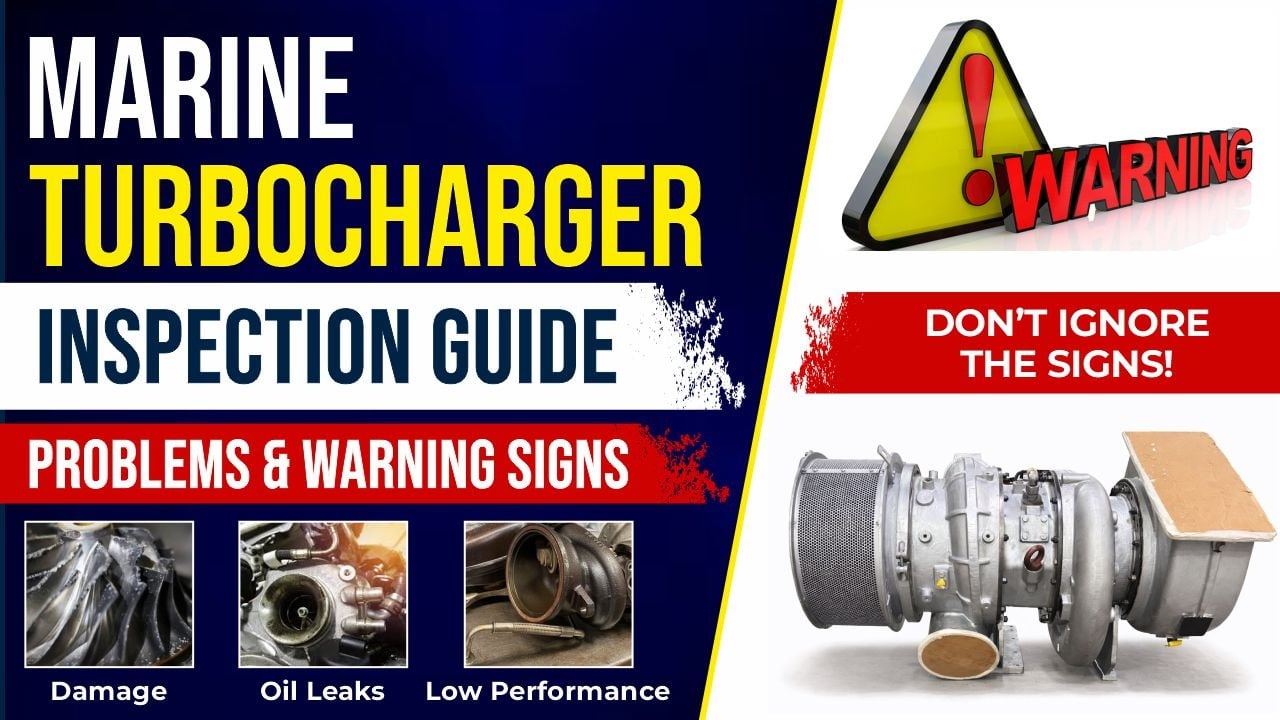
Introduction
The marine turbocharger is the lungs of the main diesel engine. By utilizing exhaust gas energy to force compressed air into the cylinders, it dramatically increases engine power output and efficiency. Operating at speeds exceeding 15,000 to 30,000 RPMs and enduring exhaust temperatures over 400°C, the turbocharger is subjected to extreme mechanical and thermal stress. A failure here doesn't just reduce engine power; a shattered turbine blade or collapsed bearing can send high-velocity shrapnel directly into the engine's scavenge space. For marine engineers and technical superintendents, mastering marine turbocharger inspection and recognizing the early warning signs of failure is critical to maintaining vessel safety and avoiding astronomical repair costs.
Technical Explanation: How the Turbocharger Fails
A marine turbocharger consists of an exhaust gas turbine driven by engine exhaust, connected via a single rotor shaft to a compressor wheel that draws in and pressurizes fresh air.
Most failures stem from three operational areas:
- Bearing Failure: The rotor shaft is supported by high-speed bearings (either ball bearings or sleeve/journal bearings) that rely on a continuous, clean supply of lubricating oil. If the oil is contaminated with carbon, water, or metal particles, or if there is a momentary drop in oil pressure, the bearings will overheat, wipe, and collapse within seconds.
- Rotor Imbalance and Fouling: The compressor wheel draws in thousands of cubic meters of engine room air daily. If the air filters are dirty, oily vapors and dust coat the compressor blades. Similarly, poor combustion causes heavy carbon deposits on the exhaust turbine blades. This uneven fouling disrupts the delicate dynamic balance of the rotor, leading to severe vibration that destroys the bearings.
- Foreign Object Damage (FOD): Any solid object—a broken exhaust valve piece, a loose nut, or even a hardened chunk of carbon—that strikes the turbine blades at 20,000 RPM will bend or shatter the blades, instantly destroying the unit.
Real-World Observations: Listening to the Engine
During vessel operations, technical teams frequently encounter turbocharger issues that announce themselves audibly before they manifest physically.
"During a loaded voyage through the Malacca Strait, the engineering watch noticed a rhythmic, deep 'coughing' sound coming from the main engine turbocharger. This was a classic case of 'turbocharger surging.' One of the most common operational mistakes is ignoring this sound. Surging occurs when the airflow through the compressor breaks down and violently reverses direction. In this instance, the crew investigated and found that the main engine scavenge air cooler was severely fouled, creating high back-pressure. Had they ignored the surging, the violent pressure fluctuations would have eventually bent the compressor wheel blades and destroyed the thrust bearing."
Technical superintendents understand that inspecting a turbocharger isn't just about looking at the casing; it is about analyzing the entire air and exhaust gas loop. A problem in the fuel injectors or the scavenge coolers almost always manifests as a symptom in the turbocharger.
Common Mistakes in Operation and Maintenance
Procurement Mistakes
- Sourcing Non-OEM Bearings: Purchasing 'equivalent' high-speed bearings from unverified suppliers. Turbocharger bearings have microscopic tolerances and specific ceramic or high-grade steel compositions; generic replacements will fail rapidly under load.
- Reusing Locking Devices: Failing to procure new tab washers and locking wires for an overhaul, leading to components vibrating loose at high speeds.
Inspection Mistakes
- Ignoring Clearances: Failing to check the axial and radial clearances of the rotor shaft using a dial gauge during routine stoppages. Increasing clearances are the first sign of bearing wear.
- Overlooking Casing Cracks: Failing to inspect the water-cooled exhaust gas casing for thermal cracks, which can leak water into the turbine side.
Storage Mistakes
- Horizontal Storage of Rotors: Storing a spare turbocharger rotor horizontally on a shelf. The heavy weight can cause the shaft to subtly bow over time. Rotors should always be stored vertically in special stands.
Installation Mistakes
- Improper Water Washing: Injecting water into the turbine side for cleaning when the exhaust temperature is too low or engine load is incorrect, leading to thermal shock and blade cracking.
- Dry Starts: Starting the engine after an overhaul without manually priming the turbocharger bearings with lubricating oil, resulting in immediate dry friction scoring.
Practical Checklist: Routine Turbocharger Inspection
To ensure reliable operation, engineers should execute this inspection checklist:
- Check Oil Parameters: Monitor turbocharger lubricating oil pressure, temperature, and sight glass flow continuously. Ensure oil samples are sent for regular laboratory analysis.
- Measure Clearances: During port stays, remove the silencer and use a dial indicator to measure the rotor's axial (thrust) and radial (journal) clearances against OEM limits.
- Inspect Compressor Blades: Remove the air filter and visually inspect the compressor wheel for oil fouling, pitting, or bent leading edges.
- Monitor Vibration: Use a portable vibration analyzer on the turbocharger casing to detect early signs of rotor imbalance before bearings fail.
- Check Cooling Water: Ensure the cooling water outlet temperatures are within limits to prevent overheating of the casing and thermal degradation of the lubricating oil.
- Log Operating Parameters: Record scavenge air pressure and exhaust gas temperatures daily. A gradual drop in scavenge pressure alongside rising exhaust temperatures usually indicates turbine fouling.
Real-World Marine Maintenance Example
On a container ship, the engineers noticed a gradual increase in the main engine exhaust temperatures and a corresponding drop in scavenge air pressure over several weeks. Instead of immediately dismantling the turbocharger, the Chief Engineer initiated the OEM's prescribed 'dry cleaning' procedure, injecting walnut shells into the exhaust gas stream while the engine was under load. The abrasive, yet soft, shells effectively knocked the hard carbon deposits off the turbine blades without damaging the metal. Within an hour, the turbocharger RPM increased, scavenge pressure returned to normal, and exhaust temperatures dropped by 15°C, restoring engine efficiency and saving the cost of a physical overhaul.
FAQ Section
What causes a turbocharger to surge? Surging is caused by an aerodynamic stall within the compressor. It typically happens when there is high resistance downstream (e.g., a dirty scavenge air cooler or clogged cylinder ports) or poor combustion, causing the airflow to momentarily reverse direction with a loud 'cough' or 'bang'.
How often should turbocharger bearings be replaced? Bearing lifespan varies by manufacturer and type. Roller bearings typically require replacement every 8,000 to 12,000 hours, while journal (sleeve) bearings might last 24,000 hours or more, provided the oil remains clean.
Why is it important to clean the turbocharger air filters? Dirty air filters restrict the air intake, forcing the turbocharger to work harder to draw air. This creates a vacuum effect that can suck lubricating oil out of the bearings into the compressor side, fouling the blades and increasing oil consumption.
Can a damaged turbine blade be repaired? Minor nicks on the edge of a blade can sometimes be carefully blended out by authorized technicians. However, if a blade is cracked, bent, or heavily eroded, the entire rotor must be replaced or re-bladed and re-balanced at an authorized facility.
What is the 'run-down' time of a turbocharger? Run-down time is the time it takes for the rotor to come to a complete stop after the engine is shut down. A significantly shortened run-down time is a strong indicator of bearing friction, heavy fouling, or mechanical rubbing inside the casing.
Conclusion
The marine turbocharger is an unforgiving piece of machinery. It demands clean air, pristine lubricating oil, and meticulously balanced components. By understanding the early warning signs—such as surging, unusual vibrations, and decreasing run-down times—marine engineers can intervene before a minor fouling issue escalates into a catastrophic mechanical failure. Routine inspections and adherence to OEM cleaning protocols are the best defenses against unexpected breakdowns.
When a turbocharger requires an overhaul, compromising on spare parts is not an option. UTS Marine LLP supplies precision-engineered, verified turbocharger components, from high-speed bearings to complete rotor assemblies, ensuring your vessel breathes easily and operates at peak efficiency across the globe.
Internal Linking Suggestions
- [Link: What Happens During a Marine Engine Overhaul? A Practical Guide for Ship Owners]
- [Link: Why Cylinder Heads Fail in Marine Diesel Engines and How to Prevent Costly Repairs]
- [Link: Precision Calibration Services for Ship Machinery Parts: Ensuring Accuracy, Safety, and Compliance at Sea]
Turbocharger Diagnostic Checklist
- Surging: Check for fouled compressor wheel, clogged air filter, or excessively dirty turbine blades affecting rotational speed.
- High Exhaust Temps: Inspect nozzle ring for missing or eroded vanes, which alters the exhaust gas flow angle onto the turbine.
- Vibration: Measure rotor run-out and check dynamic balance. Often caused by bearing wear or foreign object damage (FOD).
- Oil Leaks: Examine labyrinth seals on both the compressor and turbine sides. Blocked sealing air passages often cause oil blow-by.
Frequently Asked Questions
What causes turbocharger surging during heavy seas?Surging in heavy seas is typically caused by rapid load fluctuations on the main engine as the propeller comes out of the water, causing an aerodynamic stall in the compressor wheel.
How often should turbocharger bearings be replaced?Bearing replacement intervals depend strictly on the manufacturer (e.g., ABB, Mitsubishi MET). Typically, thrust and journal bearings are replaced every 12,000 to 16,000 operating hours.