The Crucial Role of Starting Air Receivers
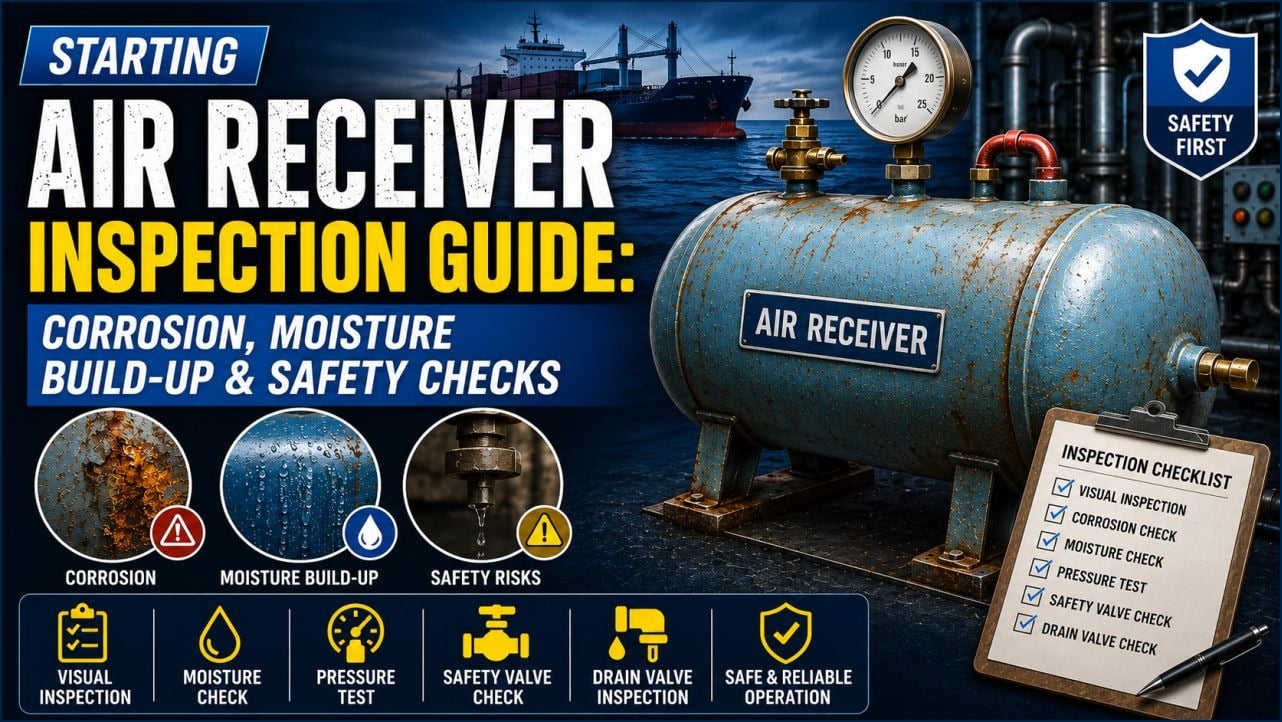
In the engine room, starting air receivers act as the heart of your pneumatic systems. Without a reliable supply of compressed air (typically around 25 to 30 bar), firing up the main engine or auxiliaries is simply impossible. Despite their importance, air bottles often only get serious attention during scheduled Class surveys or when a problem arises. Regular, thorough inspection is key to preventing catastrophic failures and ensuring the vessel remains seaworthy.
Why Internal Corrosion Happens
One of the biggest threats to an air receiver is internal corrosion. When air is compressed, its temperature rises. As it travels to the receiver and cools, the moisture suspended in the air condenses. This water, combined with traces of compressor lubricating oil and the oxygen-rich environment, creates a perfect breeding ground for rust. Over time, pitting corrosion can severely weaken the vessel's shell, leading to a loss of structural integrity.
Managing Moisture Accumulation
Moisture isn't just a catalyst for rust; it can also wreak havoc if it travels downstream to pneumatic control valves or engine starting valves. The most effective way to handle this is through diligent draining. Moisture traps and auto-drains are helpful, but manual draining is the only way to be completely sure. Engineers should make it a habit to drain receivers every watch, especially in high-humidity conditions where condensation rates spike.
Drain Valve Inspection
Drain valves endure a lot of abuse. They handle high-pressure blasts of water, oil sludge, and rust particles. When inspecting the drain valves, look for signs of passing (leaking). A passing drain valve not only wastes compressed air but also causes the compressors to run longer and hotter. Ensure the valve operates smoothly and seals completely when closed.
Pressure Testing and Survey Preparation
During dry dock or major surveys, air receivers undergo a hydrostatic pressure test, usually at 1.5 times the working pressure. Before testing, the interior must be thoroughly cleaned and dried to allow the surveyor to check for pitting and weld decay. Ultrasonic thickness gauging might also be performed to verify the remaining shell thickness against Class limits.
Safety Valve Inspection
Every air receiver is fitted with a relief valve to prevent over-pressurization. These valves must be tested regularly. You should check the lifting gear (hand-easing gear) to ensure it moves freely. The valve should pop cleanly at the set pressure and reseat without leaking. Never attempt to tighten a leaking safety valve beyond its setting; if it leaks, it needs a proper overhaul.
Inspection Checklist for Engineers
- Check shell and dished ends for signs of external corrosion or paint degradation.
- Verify the operation of auto-drains (if fitted) and manually blow down each watch.
- Inspect the safety valve for leakage and test the hand-easing gear.
- Examine the pressure gauges against a calibrated master gauge.
- Check the condition of the fusible plug (designed to melt in case of fire).
- During internal inspections, look closely at the bottom section and weld seams for pitting.
Troubleshooting Common Issues
Symptom Possible Cause Action Required Frequent compressor running Air leaks in the system, passing drain or safety valve Identify leak source, overhaul valves as needed Excessive water in control air Failure to drain receiver, faulty auto-drain Manually blow down receiver, repair auto-drain Safety valve lifting prematurely Weak spring, incorrect setting, or passing valve Overhaul safety valve, reset and test on benchFrequently Asked Questions
How often should I drain the starting air receiver?
It should be drained at least once per watch, or more frequently if operating in highly humid environments.
What is the purpose of the fusible plug?
The fusible plug melts at a specific temperature (usually around 100°C to 105°C) to relieve pressure in the event of an external fire, preventing a catastrophic explosion.
Can I paint the inside of an air receiver?
Some manufacturers apply specific internal coatings (like epoxy), but you should always consult the manual and Class guidelines before applying any new coating, as incorrect types can peel and block valves.