Introduction
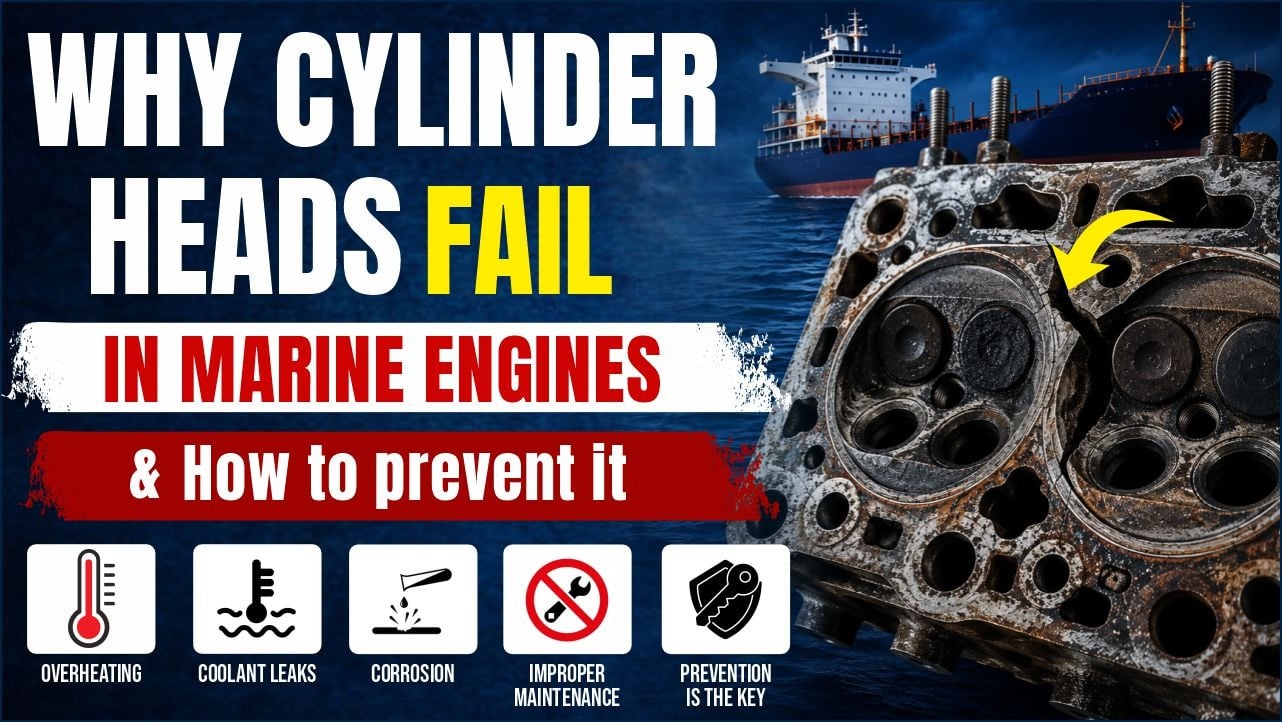
The cylinder head (or cylinder cover) of a marine diesel engine operates in one of the most brutal environments imaginable. It seals the combustion chamber, housing the fuel injectors, exhaust valves, starting air valves, and relief valves, while simultaneously managing the intense thermal shock of combustion and the rapid cooling of jacket water. When a cylinder head fails, the consequences are immediate and severe: loss of compression, water leaking into the combustion chamber, or catastrophic engine damage. Understanding the root causes of marine cylinder head failure is essential for technical superintendents and marine engineers who want to optimize maintenance schedules and prevent massive repair bills.
Technical Explanation: The Mechanics of Failure
Marine cylinder heads are typically cast from specialized iron alloys or forged steel designed to withstand extreme pressure and heat. However, failure usually occurs through one of three primary mechanisms:
- Thermal Fatigue and Cracking: The combustion side of the head is exposed to temperatures exceeding 1,500°C, while the cooling water side is maintained around 80°C. This massive temperature gradient causes the metal to expand and contract unevenly during load changes. Over time, this thermal cycling leads to microscopic cracks, usually originating between the valve seats or around the fuel injector bore, which eventually propagate through the casting.
- Cooling System Deficiencies: If the cooling water spaces inside the cylinder head become scaled with calcium or obstructed by sludge, the heat transfer efficiency drops drastically. Localized "hot spots" develop, leading to rapid thermal stress cracking or burning of the metal.
- Mechanical Overstress: Over-torquing the cylinder head studs during installation, or operating the engine with consistently high peak firing pressures (Pmax) due to poor fuel injection timing, places excessive mechanical strain on the casting, causing it to warp or crack.
Real-World Observations: The Silent Killers
During marine spare parts inspections and engine teardowns, technical teams frequently encounter cylinder heads that were operating on borrowed time.
"During a routine scavenge space inspection on a product tanker, the engineering crew noticed a very slight accumulation of white residue on the piston crown of unit number two. Further investigation revealed that the cylinder head had developed a microscopic crack in the cooling jacket. Water was slowly weeping into the cylinder during the exhaust stroke and evaporating. Had this gone unnoticed, the crack would have expanded under load, leading to a massive ingress of water. The resulting hydrostatic lock during the compression stroke would have bent the connecting rod and shattered the cylinder liner."
One of the most common procurement mistakes is purchasing reconditioned cylinder heads from unverified workshops that weld cracks without proper post-weld heat treatment (stress relieving). The operational result is that the head looks brand new but cracks open in the exact same spot within 500 running hours.
Common Mistakes in Operation and Maintenance
Procurement Mistakes
- Sourcing Poorly Reconditioned Heads: Buying 'rebuilt' heads where cracks were merely ground out and patched with low-quality welding rods without proper NDT (Non-Destructive Testing) verification.
- Ignoring Valve Seat Rings: Replacing the cylinder head but reusing old, worn-out exhaust valve seat rings, leading to poor sealing and gas blow-by.
Inspection Mistakes
- Skipping NDT: Failing to perform dye penetrant or magnetic particle testing on the cylinder head during a major overhaul to check for invisible hairline cracks.
- Neglecting Cooling Spaces: Inspecting only the combustion face and ignoring the scale buildup inside the internal cooling water passages.
Storage Mistakes
- Improper Sealing: Storing a spare cylinder head without blanking off the cooling water ports, allowing atmospheric moisture to cause internal rust.
- Deck Storage: Leaving spare heads lashed to the deck exposed to salt spray instead of in a controlled engine room environment.
Installation Mistakes
- Uneven Torqueing: Failing to tighten the cylinder head nuts in the correct sequence (typically a star pattern) or using incorrect hydraulic pressure, causing the head to warp upon installation.
- Reusing Old O-rings: Trying to save pennies by reusing the massive rubber O-rings that seal the cooling water passages between the head and the liner, guaranteeing a water leak.
Practical Checklist: Preventing Cylinder Head Failure
To maximize the lifespan of marine cylinder heads, implement the following maintenance routines:
- Monitor Cooling Water Quality: Test jacket cooling water daily. Maintain correct levels of corrosion inhibitors (e.g., nitrites) to prevent scale and cavitation erosion inside the head.
- Optimize Combustion: Ensure fuel injectors are overhauled regularly and timing is correct. Poor combustion leads to after-burning, which drastically increases the exhaust temperature and thermal load on the head.
- Follow Warm-up Procedures: Never start a cold engine and push it to full load. Always circulate pre-heated jacket water through the engine before starting to minimize thermal shock.
- Perform NDT During Overhauls: Make dye penetrant testing of the valve seat areas mandatory during every scheduled piston pulling.
- Descale Cooling Spaces: Periodically circulate a chemical descaling solution through the engine's cooling system to remove mineral deposits and restore heat transfer efficiency.
- Strict Torque Adherence: Always use calibrated hydraulic tensioners and follow the exact OEM tightening sequence and pressure specifications.
Real-World Marine Maintenance Example
On a Ro-Ro vessel operating in the North Sea, the main engine began experiencing high exhaust gas temperatures on one cylinder. The engineering team suspected a faulty fuel injector, but after replacing it, the temperature remained high. When they eventually pulled the cylinder cover, they discovered that the exhaust valve seat had burned away due to a warped cylinder head. The root cause? During a previous overhaul, the crew had not tightened the head studs evenly. The slight warpage prevented the exhaust valve from seating perfectly, allowing high-pressure combustion gases to blow past the valve, acting like a cutting torch on the metal. The entire cylinder head had to be replaced.
FAQ Section
Why do cracks usually start between the valve seats? The area between the exhaust and intake valves (the "valve bridge") is the thinnest section of metal in the combustion chamber and is subjected to the highest thermal gradients, making it the most susceptible to stress cracking.
Can a cracked cylinder head be repaired? Yes, but it requires highly specialized procedures. The crack must be fully excavated, welded using specific alloys, and then the entire cylinder head must be placed in an oven for stress-relieving heat treatment. Finally, the mating surfaces must be re-machined.
How does poor fuel quality affect the cylinder head? Poor quality heavy fuel oil (HFO) with high levels of vanadium and sodium forms corrosive ash during combustion. This ash sticks to the exhaust valve seats and the cylinder head face, causing high-temperature hot corrosion that literally eats away the metal.
What is the function of the cylinder head safety relief valve? The relief valve is designed to pop open and vent gases if the pressure inside the cylinder exceeds safe limits (e.g., due to a fuel pump injecting too much fuel or hydrostatic lock), preventing the cylinder head or studs from fracturing.
How often should cylinder heads be overhauled? This depends on the engine manufacturer, but a complete cylinder head overhaul (including valve grinding and cooling space descaling) is typically scheduled every 8,000 to 16,000 running hours.
Conclusion
Marine cylinder head failures are rarely sudden, unpredictable events; they are usually the culmination of long-term thermal stress, neglected cooling water treatment, or improper installation practices. By understanding the mechanics of thermal fatigue and rigorously adhering to OEM maintenance and tightening protocols, marine engineers can drastically reduce the incidence of these failures.
When it is time to replace or upgrade your cylinder heads, ensure you source components from reputable suppliers who guarantee metallurgical integrity. UTS Marine LLP provides verified, high-quality marine engine components designed to withstand the harshest combustion environments, keeping your vessels operating safely and efficiently.
Internal Linking Suggestions
- [Link: What Happens During a Marine Engine Overhaul? A Practical Guide for Ship Owners]
- [Link: MAN B&W vs Sulzer Two-Stroke Marine Engines: Spare Parts Comparison for Ship Owners]
- [Link: Precision Calibration Services for Ship Machinery Parts: Ensuring Accuracy, Safety, and Compliance at Sea]