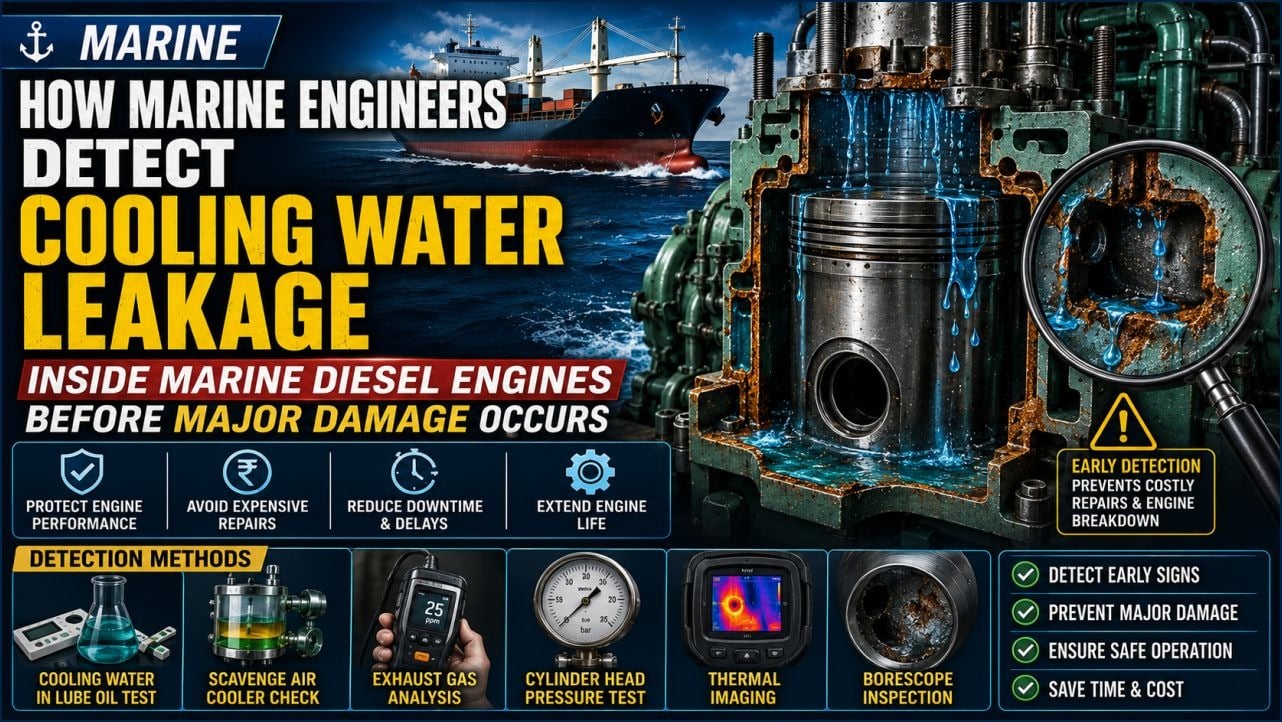
Unexplained coolant loss, overheating, and oil contamination often trace back to one specific failure point: marine engine cooling water leakage. When freshwater escapes the cooling jacket and enters the combustion chamber or crankcase, the resulting damage escalates rapidly from poor combustion to total catastrophic failure, including bent connecting rods from hydrostatic lock.
Symptoms of a Freshwater Leakage in a Diesel Engine
Engineers rely on physical symptoms and instrumentation to identify cooling water leaks before dismantling the engine components.
- Jacket Water Expansion Tank Level: A steady, unexplained drop in the expansion tank level indicates a system leak. If external piping shows no signs of dripping, the leak is internal.
- White Exhaust Smoke: Water entering the combustion chamber vaporizes, producing dense white smoke at the funnel.
- Lube Oil Emulsification: Water mixing with crankcase oil turns the lubricant milky white. Engineers detect this through routine visual checks or when the purifier discharges excessive water.
- High Cooling Water Temperature: Loss of coolant volume reduces heat transfer efficiency, triggering high-temperature alarms on specific cylinders.
- Abnormal Scavenge Space Drains: Excessive water draining from the scavenge air receiver often points to a cracked liner or leaking O-rings.
Primary Causes of a Cylinder Liner Water Leak
Cooling water jackets surround the cylinder liner to absorb combustion heat. Leaks in this area typically occur due to:
- O-Ring Degradation: Rubber sealing rings at the bottom of the cylinder liner harden, lose elasticity, or perish due to age, high temperatures, and chemical degradation from improper water treatment.
- Cavitation Erosion: High-frequency vibrations from piston slap cause localized pressure drops on the coolant side of the liner. Bubbles form and implode against the metal surface, slowly eating away the liner material until a breach occurs.
- Thermal Cracking: Rapid temperature fluctuations, often caused by sudden load changes or improper cooling water preheating before starting, create thermal stress that cracks the cylinder cover or upper liner flange.
Cooling System Inspection and Testing Procedures
Routine inspection of the marine engine cooling system prevents minor leaks from developing into major failures. When a leak is suspected, marine engineers execute specific diagnostic tests.
Hydraulic Pressure Testing
During an engine overhaul, engineers isolate the cooling jacket and apply hydraulic pressure. By blanking off the cooling water inlet and outlet, and pressurizing the space with a hand pump, they can monitor the pressure gauge. A dropping gauge confirms a leak, and visual inspection of the liner underside reveals the exact location of failing O-rings.
Crankcase Inspection
With the engine stopped and secured, engineers enter the crankcase to inspect the underside of the cylinder liners. Traces of rust, water droplets, or white scaling along the liner skirt indicate cooling water bypassing the lower sealing rings.
Cooling Water Chemical Analysis
Testing the jacket water for combustion gases (using chemical indicator tubes) helps identify a cracked cylinder head. If exhaust gases push into the cooling system, the cooling water pH drops, becoming acidic.
Preventative Maintenance Measures
Preventing marine engine cooling water leakage requires strict adherence to planned maintenance systems. Replacing cylinder liner O-rings at the recommended running hours, maintaining correct jacket water chemical treatment (nitrite levels) to prevent cavitation, and regularly testing lube oil for moisture content form the foundation of reliable engine operation.