Marine engine bearing failure stands as one of the most expensive and time-consuming mechanical breakdowns a ship can suffer. The main bearings and connecting rod bearings support the massive rotational forces of the crankshaft. When these bearings fail, the resulting friction generates intense heat, melting the bearing material and permanently scoring the crankshaft journals. Understanding the root causes of failure allows engineers to identify warning signs during routine crankcase inspections.
Bearing Construction and Hydrodynamic Lubrication
Modern marine diesel engine bearings consist of a strong steel backing shell lined with a softer bearing alloy, traditionally a tin-based babbitt metal (white metal) or an aluminum-tin alloy. A microscopic layer of lubricating oil separates the bearing from the spinning crankshaft journal.
During operation, the rotation of the crankshaft pulls oil into a wedge shape, creating high hydrodynamic pressure that literally lifts the heavy crankshaft off the bearing surface. True metal-to-metal contact should only occur for a fraction of a second during engine start-up or shutdown. If this hydrodynamic oil film breaks down, failure initiates immediately.
Primary Causes of Bearing Failure
Oil Starvation and Thinning
The most common cause of white metal bearing damage is a lack of lubrication. This occurs due to a failing lube oil pump, blocked oil galleries, or incorrect oil viscosity. If the oil is heavily diluted by unburnt fuel, or if it overheats and thins out, it cannot maintain the necessary pressure wedge, allowing the heavy crankshaft journal to crash through the film and scrape the soft bearing metal.
Abrasive Contamination
Hard particles (such as dirt, rust scale, or catalytic fines from fuel) circulating in the lube oil get dragged into the clearance space between the journal and the bearing. Because the bearing lining is soft, small particles embed themselves into the white metal. However, larger particles score deep circumferential scratches into both the bearing shell and the steel crankshaft.
Misalignment and Edge Loading
If the engine bedplate distorts or the crankshaft bends due to hull deflection or improper foundation tension, the crankshaft journal will no longer sit perfectly parallel to the bearing surface. This forces the journal to press heavily on one specific edge of the bearing, breaking the oil film and wiping the white metal locally.
Fatigue Failure
Prolonged exposure to heavy, pulsating combustion loads eventually causes the soft bearing alloy to crack. Fatigue appears as a network of fine cracks (often called "crazy paving" or "mosaic" cracking) on the bearing surface. Pieces of the white metal eventually flake off, disrupting the oil flow and triggering localized overheating.
Inspection Procedures and Marine Bearing Clearance
Engineers evaluate bearing health during scheduled connecting rod bearing inspections and main bearing overhauls.
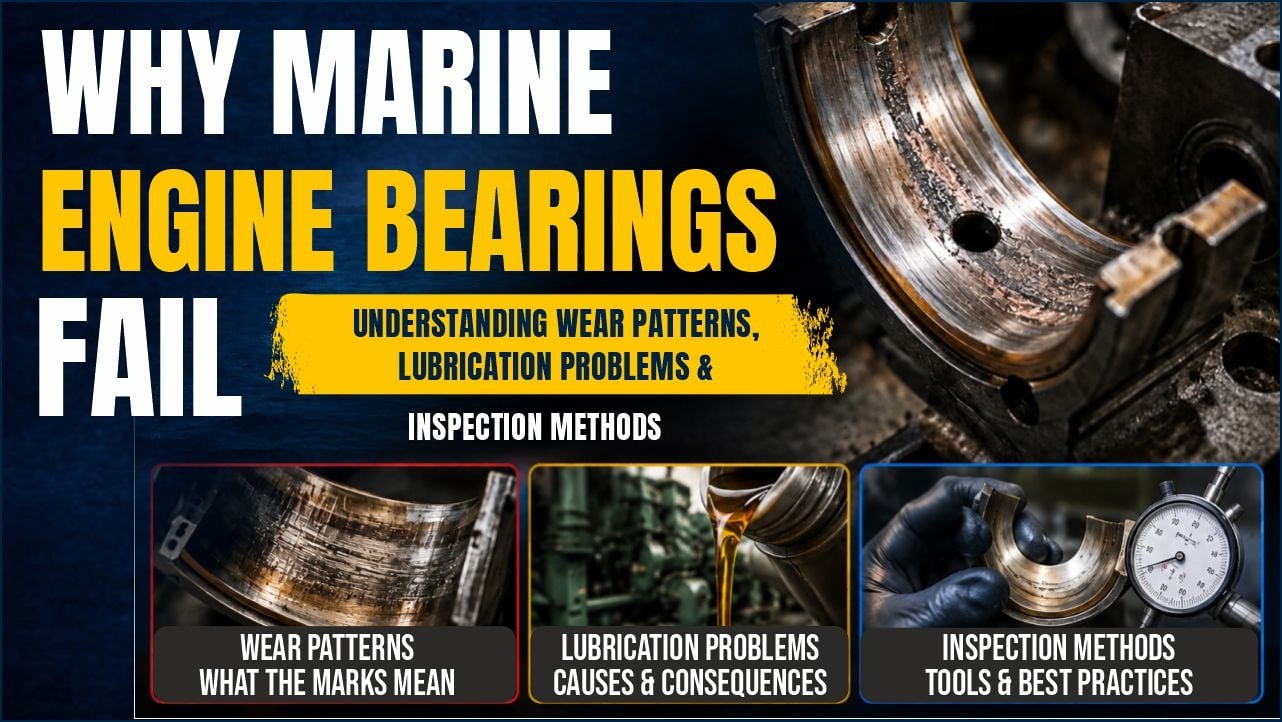
- Visual Inspection: Look for wiping (where the soft metal has melted and smeared), deep scoring lines, embedded dirt, or missing patches of white metal. The bearing shell should have an even, dull grey appearance.
- Clearance Measurement: Measuring the gap between the journal and the bearing is critical. Engineers use lead wire or specialized plastic gauges (Plastigauge) squeezed between the assembled bearing and journal. If the measured marine bearing clearance exceeds the manufacturer's maximum limit, the oil will leak out of the sides too quickly to build hydrodynamic pressure, necessitating immediate shell replacement.
Bearing Failure Pattern Comparison Table
Visual Wear Pattern Underlying Cause Required Corrective Action Deep circumferential scratches and grooves Abrasive contamination (dirt, metal shards) Purify lube oil, clean sumps, inspect filters, polish journal. Smeared, melted metal (wiping) over wide area Oil starvation or severe overheating Check LO pump pressure, inspect oil coolers, check viscosity. Wear concentrated on one extreme edge Shaft misalignment or bent connecting rod Check crankshaft web deflections and bedplate holding-down bolts. Spiderweb cracking / flaking of overlay Metal fatigue from overloading/age Replace bearing shells, check peak cylinder combustion pressures.Proactive main bearing wear detection relies on routine lube oil analysis and rigorous adherence to scheduled clearance measurements, preventing catastrophic failures that require complete engine removal.