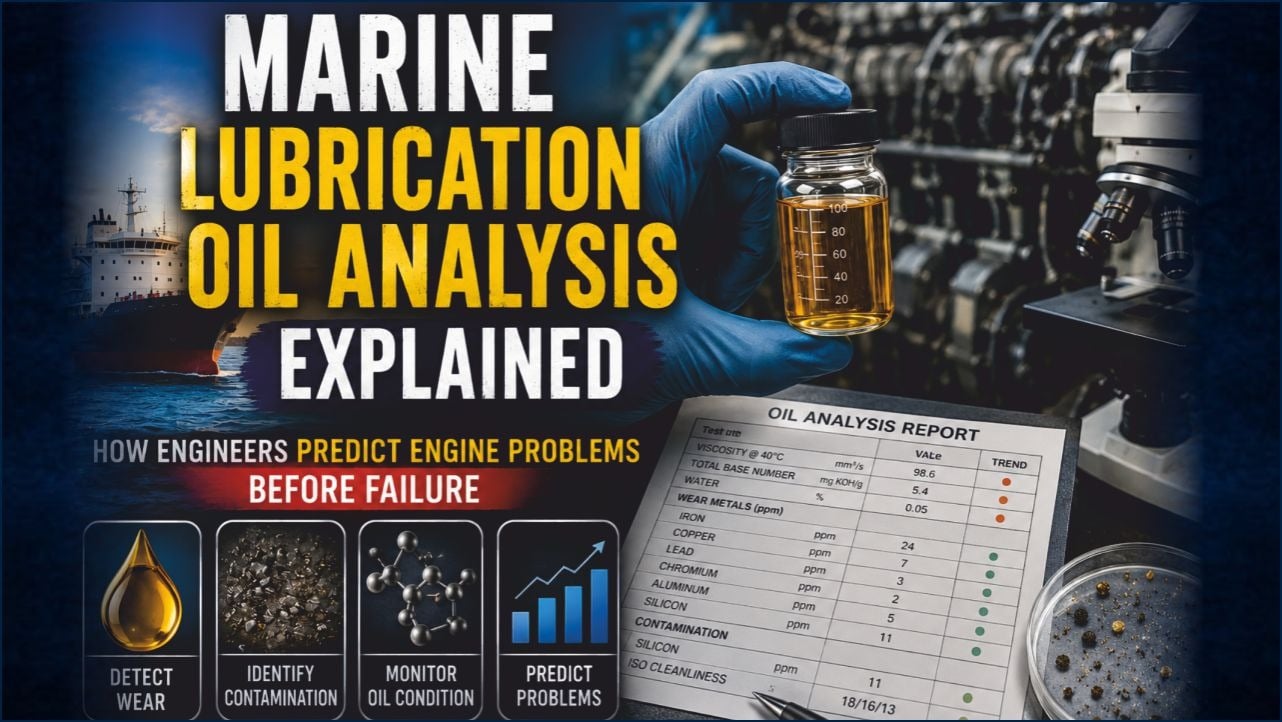
Marine lubrication oil analysis acts as the primary blood test for a marine diesel engine. Instead of waiting for a component to fail, engineers use routine oil sampling to monitor internal wear rates, fluid degradation, and system contamination. This predictive maintenance approach allows technical teams to schedule overhauls precisely when needed, extending the lifespan of crankshafts, pistons, and cylinder liners.
The Mechanics of Diesel Engine Oil Testing
Engineers extract oil samples from a running engine under normal load conditions, typically from a designated sample valve located before the oil filter. The sample is sent to a shoreside laboratory where spectrometers and viscometers quantify the chemical and physical properties of the lubricant down to parts per million (PPM).
Interpreting Wear Metals in Marine Oil Analysis
The presence of specific trace metals in the oil sample points directly to the degradation of corresponding engine components. Engineers analyze these trends to identify which parts are failing.
- Iron (Fe): Indicates wear on cylinder liners, piston rings, gears, or shafts. A sudden spike in iron PPM suggests scuffing or abrasive wear inside the cylinder.
- Copper (Cu) & Lead (Pb): High concentrations of these metals point to wearing main bearings, crankpin bearings, or camshaft bushings. These soft metals form the sacrificial layer of hydrodynamic bearings.
- Chromium (Cr): Points to wear on chrome-plated piston rings or valve stems. High chromium combined with high iron usually confirms piston ring and liner friction.
- Aluminum (Al) & Silicon (Si): Indicates the presence of catalytic fines (cat fines) from poor quality heavy fuel oil (HFO) or inadequate fuel purification. These particles cause severe abrasive wear on fuel pumps and liners.
Detecting Oil Contamination in a Marine Engine
Lubricating oil loses its protective properties when contaminated by external fluids or combustion byproducts.
Water Contamination
Water enters the lube oil system through leaking cylinder liner O-rings, cracked cooler tubes, or condensation. Water contamination destroys the oil's hydrodynamic film, leading to immediate bearing wiping. Laboratory tests report water content as a percentage. Anything above 0.2% requires immediate purifier optimization or source investigation.
Fuel Dilution
Unburnt fuel passing the piston rings or leaking from high-pressure fuel pumps dilutes the lube oil. This reduces the oil's viscosity, thinning the protective film between the crankshaft and bearings. Engineers detect fuel dilution through a measurable drop in oil flash point and viscosity.
Viscosity and Base Number (BN) Tracking
Viscosity determines the oil's ability to maintain a load-bearing film under pressure. Oxidation (aging) or soot accumulation increases viscosity, causing the oil to thicken and restrict flow to critical bearings. Conversely, fuel dilution decreases viscosity.
The Base Number (BN) represents the oil's alkaline reserve, which neutralizes acidic combustion gases (sulfuric acid) formed when burning sulfur-heavy fuels. As the oil neutralizes these acids over thousands of running hours, the BN depletes. If the BN drops below the manufacturer's limit, corrosive wear accelerates rapidly on the cylinder liners and piston rings.
Implementing Predictive Maintenance Marine Strategies
Effective sample interpretation requires comparing the current laboratory results against the engine's historical baseline. A gradual increase in copper over 5,000 hours represents normal bearing wear, whereas a sharp spike in a single month dictates an immediate crankcase inspection. Integrating marine oil analysis into the vessel's planned maintenance system (PMS) transitions the engineering team from reactive firefighting to proactive, data-driven reliability.