Understanding Power Loss
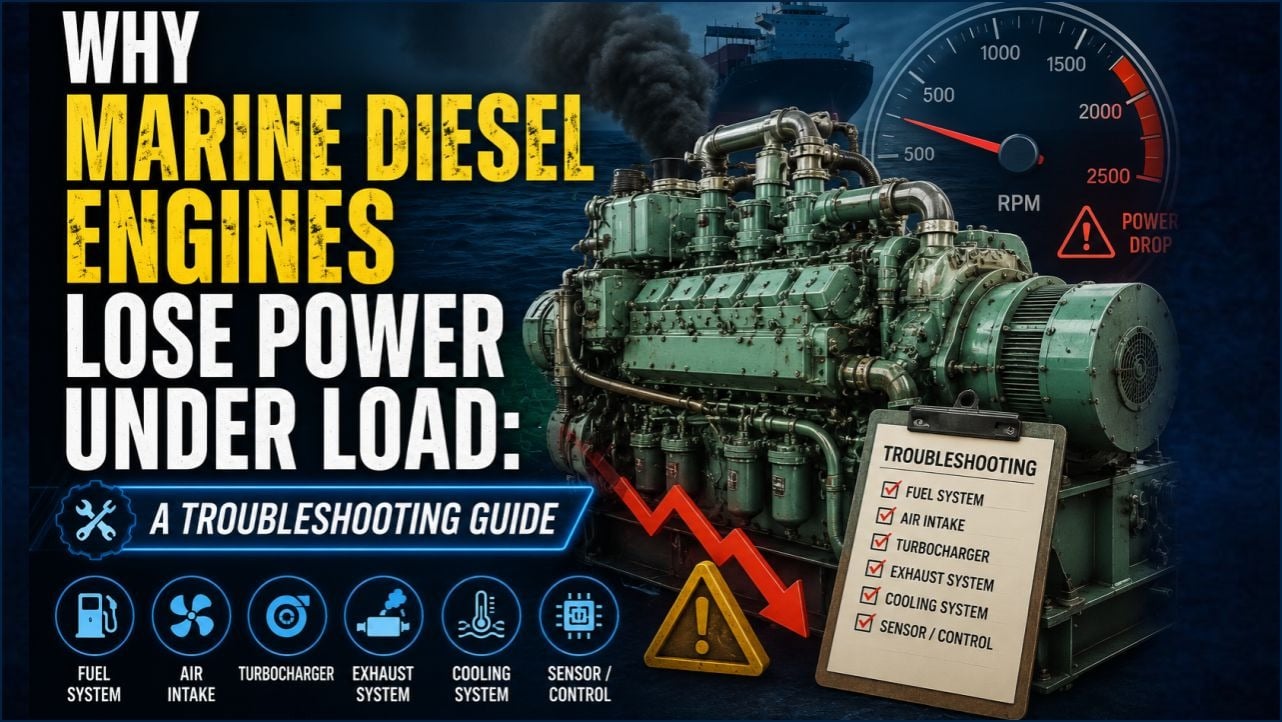
There are few things more stressful than a marine diesel engine failing to deliver expected power when the vessel needs it most—like maneuvering in heavy weather or fighting a strong current. Power loss under load means the engine cannot maintain its RPM when resistance is applied. Diagnosing this requires a systematic approach, examining fuel, air, compression, and exhaust.
Fuel System Causes
The fuel system is the most common culprit. If the engine is starving for fuel, it can't produce power.
- Clogged Filters: Primary and secondary fuel filters blocked with sludge, water, or microbial growth (diesel bug) restrict flow.
- Faulty Injectors: Worn injector nozzles cause poor atomization, leading to incomplete combustion (often accompanied by black smoke).
- Low Fuel Pressure: A failing booster pump or a sticking pressure regulating valve will drop supply pressure.
- Air in the Fuel Lines: Air compresses, causing delayed or missing injection events.
Air System Causes
An engine needs a massive volume of dense air to burn fuel efficiently.
- Blocked Intake: A dirty air filter or obstructed engine room ventilation restricts breathing.
- Turbocharger Issues: A fouled turbine or compressor wheel, or worn bearings, will prevent the turbo from spooling up, leading to low scavenge air pressure.
- Fouled Intercooler: As discussed in other guides, a dirty charge air cooler restricts air flow and reduces air density.
Compression Problems
If the cylinder cannot squeeze the air tight enough, it won't get hot enough to ignite the fuel properly.
- Worn Piston Rings/Liners: Excessive wear allows blow-by, where combustion pressure escapes into the crankcase.
- Leaking Valves: Burned or improperly seated exhaust/intake valves (on 4-stroke engines) will bleed compression.
- Blown Cylinder Head Gasket: Causes a loss of compression and often cross-contamination of cooling water and combustion gases.
Exhaust System Issues
High exhaust backpressure chokes the engine, preventing exhaust gases from leaving the cylinder and fresh air from entering.
- Fouled Exhaust Boiler (Economizer): Soot buildup restricts exhaust gas flow.
- Blocked Spark Arrester/Silencer: Carbon buildup in the exhaust trunking.
Step-by-Step Diagnostic Workflow
- Check the obvious first: Are all fuel valves open? Is the fuel tank level sufficient? Are there any active alarms?
- Look at the smoke:
- Black smoke: Too much fuel, not enough air (Turbo issue, dirty intake, bad injectors).
- White smoke: Unburnt fuel (loss of compression) or water in the cylinder.
- Blue smoke: Burning lube oil (worn rings, valve guides).
- Check parameters: Compare current exhaust temperatures, scavenge pressure, and fuel rack positions against sea trial data.
- Change fuel filters: This is the quickest and most common fix.
- Take indicator cards (if applicable): Use an engine indicator to check peak firing pressures and compression pressures to isolate problematic cylinders.
Troubleshooting Matrix
Observation Probable Cause First Action Low RPM, clean exhaust, high fuel rack Fuel starvation (filters, pump pressure) Check fuel pressure, change filters Low RPM, black smoke, high exhaust temps Lack of air (turbo fouled, dirty air filter) Check scavenge pressure, clean air filters Low power on specific cylinder, low exhaust temp Faulty fuel injector or pump on that unit Replace injector, check fuel pump timingFrequently Asked Questions
Why does the engine run fine idle but die under load?
An engine needs very little fuel to idle. A partially blocked filter might let enough fuel through for idling, but when the governor demands more fuel under load, the restriction causes starvation and RPM drop.
Can poor fuel quality cause power loss?
Absolutely. Low cetane number, high water content, or heavy cat-fines can severely affect combustion efficiency and damage fuel injection equipment rapidly.