The Purpose of Intercoolers
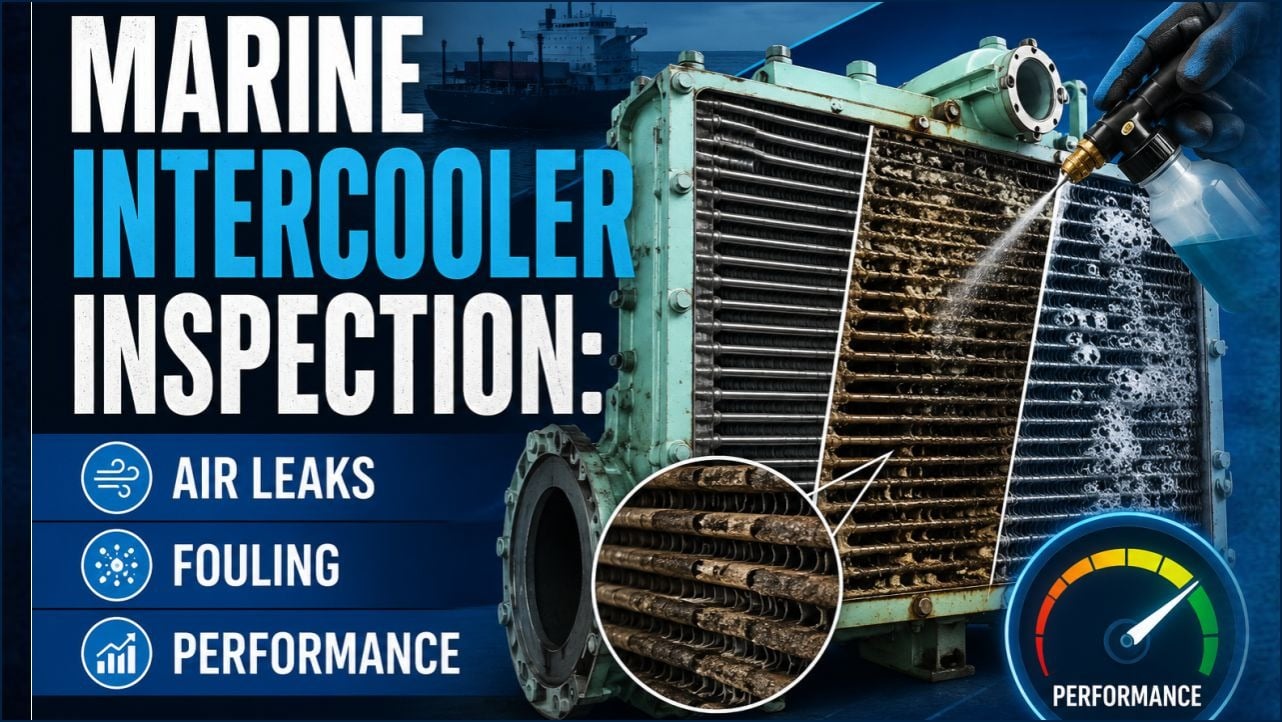
Also known as charge air coolers, intercoolers are positioned between the turbocharger compressor and the engine's intake manifold. When the turbocharger compresses air, the air gets hot. Hot air is less dense, meaning less oxygen per cylinder stroke. The intercooler cools this compressed air (usually using sea water or central fresh water), increasing its density. This allows more fuel to be burned efficiently, boosting power output and lowering exhaust temperatures.
Dealing with Fouling
Over time, the air side of the intercooler fins becomes coated with a mixture of oily vapor (from crankcase breathers or minor turbocharger seal leaks) and dust. This sticky layer drastically reduces heat transfer and restricts airflow. You'll notice a drop in scavenge air pressure and an increase in scavenge air temperature, leading to higher exhaust gas temperatures.
Salt Deposits and Water Side Scaling
On the cooling water side (especially if using sea water), salt deposits, scale, and marine growth can block the tubes. This restricts water flow, meaning the cooler cannot remove heat effectively. Regular back-flushing can help, but eventually, chemical cleaning is required.
Detecting Tube Leakage
A leaking intercooler tube is serious. If water leaks into the charge air side, it will be carried into the engine cylinders. This can cause poor combustion, white smoke, and in severe cases, a hydraulic lock causing bent connecting rods or cracked heads. Signs of leakage include water dripping from the scavenge drain or an unexplained drop in expansion tank level (if fresh water cooled).
Pressure Testing
During maintenance, or if a leak is suspected, the cooler must be pressure tested. The water side is blanked off and pressurized with water or air (depending on manufacturer guidelines). Any weeping tubes must be identified and plugged using specialized brass or copper plugs. Note that there is a limit to how many tubes can be plugged before the cooler's efficiency drops below acceptable levels (usually around 10%).
Cleaning Methods
Air Side: Often cleaned in-situ using built-in chemical injection systems while the engine is running at reduced load, or dismantled and soaked in a chemical bath.
Water Side: Usually requires isolation, draining, and circulation of a descaling acid solution, followed by a thorough fresh water flush and neutralization.
Inspection Checklist
- Monitor pressure drop across the air side (delta P). An increasing pressure drop indicates fouling.
- Monitor scavenge air temperature and cooling water outlet temperature.
- Regularly check the scavenge drain for signs of excessive oil or water.
- Inspect the water boxes and sacrificial anodes (if sea water cooled) for corrosion.
- During overhauls, inspect fins for damage or flattening which restricts airflow.
Frequently Asked Questions
Why is water coming out of my scavenge drain?
A small amount of condensation is normal, especially in humid climates, as cooling the air below its dew point causes water to drop out (which is why moisture separators are fitted). However, a continuous, heavy flow could indicate a leaking intercooler tube.
How often should a charge air cooler be chemically cleaned?
This depends heavily on operating conditions and the fuel being used, but typically it is done during major overhauls (e.g., every 8,000 to 12,000 hours) or whenever the performance parameters (temperatures and pressure drops) dictate.