Introduction
The efficiency of a marine separator directly dictates the reliability of the main engine. Purifiers are the first line of defence against catastrophic engine damage, removing water and abrasive catalytic fines from heavy fuel oil (HFO) and lubricating oil. When marine separator bowl assembly problems occur, contaminated oil bypasses the purification process, leading to rapid wear of fuel pumps, injectors, and cylinder liners.
How Separator Bowl Assemblies Work
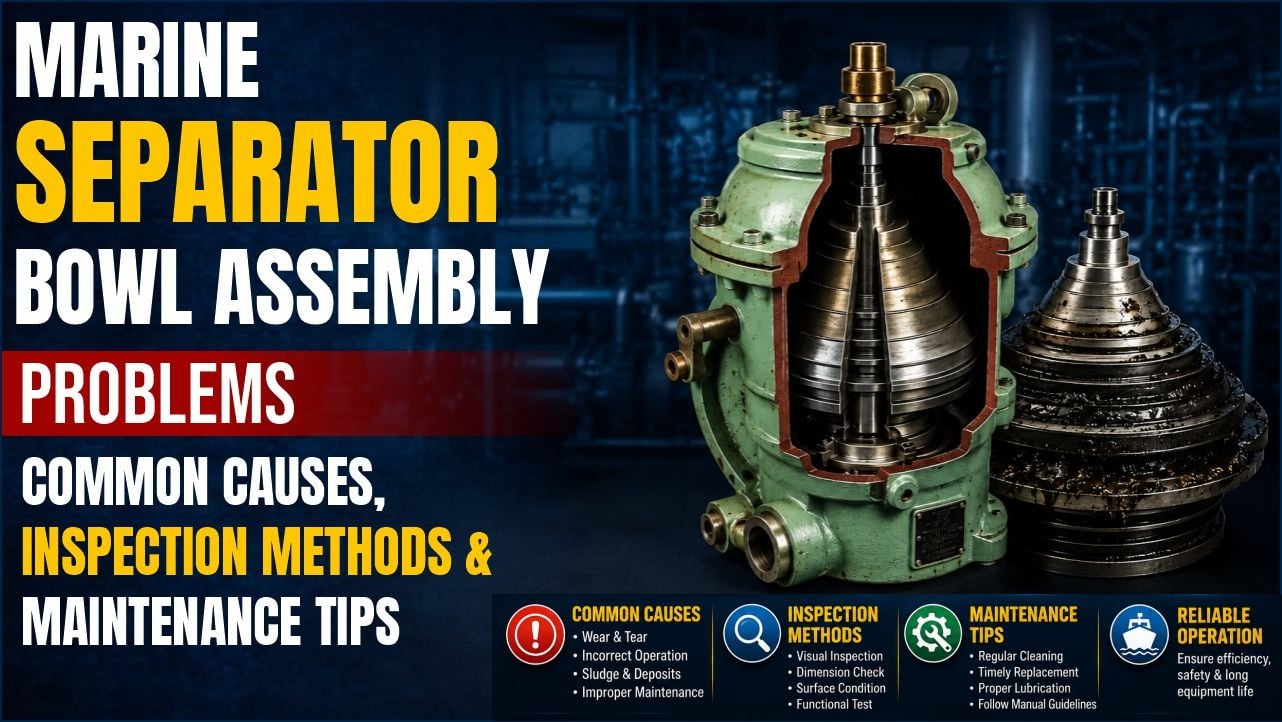
A separator bowl spins at extremely high RPM, using centrifugal force to separate fluids and solids of different specific gravities. The heavy phase (water and sludge) moves to the periphery of the bowl, while the light phase (clean oil) moves towards the centre. The disc stack inside the bowl assembly provides additional surface area to accelerate this separation process.
Common Bowl Assembly Problems
- Sludge accumulation: Hardened sludge buildup at the bowl periphery prevents proper discharge during the shooting cycle. This reduces the effective separation area and throws the bowl out of balance.
- Disc stack contamination: Carbon and sludge fouling between the conical discs reduces the separation efficiency. Oil velocity increases through the restricted gaps, carrying impurities with it.
- Seal ring damage: Worn or hardened main seal rings (O-rings) cause the bowl to leak operating water, preventing it from closing properly. This results in continuous oil leakage from the sludge discharge port.
- Excessive vibration: Usually caused by an unbalanced bowl assembly, worn spindle bearings, or uneven sludge accumulation. Ignoring vibration leads to severe mechanical failure of the vertical shaft and gear drive.
Warning Signs During Operation
Engineers must monitor specific parameters during oil purifier maintenance routines. A sudden drop in clean oil delivery pressure, frequent bowl failure alarms, excessive water in the clean oil outlet, or abnormal mechanical noise requires immediate investigation of the alfa laval separator problems or westfalia separator maintenance schedules.
Inspection Procedure
During a marine separator overhaul, systematic inspection is mandatory.
- Dismantle the bowl using the designated OEM tools to prevent thread damage.
- Check the condition of the gravity disc or pairing disc.
- Examine the sliding bowl bottom for scoring or abnormal wear on the contact surfaces.
- Measure the height of the compressed disc stack to ensure it meets manufacturer specifications.
Cleaning & Maintenance Process
Never use sharp steel tools to scrape sludge from the bowl components, as this damages the protective anodized coating and creates stress risers. Soak the disc stack in a designated carbon-removing chemical solvent. Clean all O-ring grooves thoroughly before installing new seals, ensuring they are lightly lubricated with the correct silicone grease.
Troubleshooting Table
Symptom Probable Cause Corrective Action Bowl fails to close Defective operating water seal ring or blocked water channel Renew main seal rings, clear operating water passages. Oil leaking from sludge port Broken bowl seal or worn sliding bowl bottom Inspect and replace bowl sealing ring. High vibration Uneven sludge buildup or worn spindle bearings Perform manual bowl cleaning, check vertical shaft bearings.Maintenance Checklist
- Renew all bowl O-rings and gaskets at recommended running hour intervals.
- Verify operating water pressure is within specification.
- Inspect the vertical and horizontal drive gears for wear.
- Check the friction clutch pads for glazing or excessive wear.
FAQ
Why is my separator bowl not discharging sludge?
This is typically due to a failure in the operating water system (insufficient pressure to open the sliding bowl bottom) or hardened sludge physically jamming the discharge ports.
How often should the disc stack be cleaned?
Cleaning intervals depend heavily on fuel quality. However, standard oil purifier maintenance schedules recommend a complete manual cleaning and inspection of the bowl assembly every 4,000 to 8,000 running hours.